




The Promise of Talking Cars
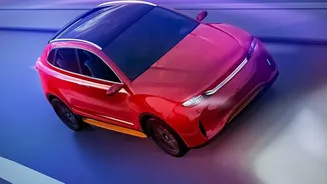
Imagine driving on a foggy highway when your car alerts you to a stalled truck around a blind corner, seconds before it becomes visible. This is the core promise of Vehicle-to-Vehicle (V2V) communication. It allows vehicles to wirelessly broadcast and
receive real-time data about their speed, position, and braking status. Unlike Advanced Driver Assistance Systems (ADAS), which rely on a vehicle's own cameras and sensors, V2V extends awareness beyond the line of sight. It’s a foundational technology for a broader ecosystem called Vehicle-to-Everything (V2X), which enables communication with road infrastructure (V2I), pedestrians (V2P), and the cellular network (V2N), creating a truly intelligent transport system.
India Hits the Accelerator
Recognizing its potential to curb India's high rate of road fatalities, the Ministry of Road Transport and Highways (MoRTH) has proposed a major push for this technology. According to a recent draft notification, V2V communication systems will become mandatory for all new two-wheelers, passenger cars, and commercial vehicles manufactured from October 1, 2028. A one-year transition period starts in October 2027, requiring any vehicles fitted with V2V systems to comply with a new standard, Automotive Industry Standard (AIS) 230. This phased rollout is designed to give manufacturers and suppliers time to adapt to one of the most significant technology-driven safety upgrades in India's automotive history.
The Hidden Crossroads: A Standards Dilemma
The headline-grabbing mandate, however, contains a critical detail that demands scrutiny. The proposed AIS-230 standard is built around a technology called Cellular V2X (C-V2X). This effectively picks a winner in a long-standing global technology debate between C-V2X and an alternative, Dedicated Short-Range Communication (DSRC). While C-V2X leverages existing and future cellular networks (like 5G) and generally offers a greater range, DSRC is a proven, Wi-Fi-like technology designed specifically for low-latency vehicle communication. Globally, different regions have taken different paths; the US is transitioning from DSRC to C-V2X, while China has standardized on C-V2X from the outset. By mandating a C-V2X-based standard, India is making a definitive choice that will shape its connected vehicle landscape for decades.
The Case for a Second Look
This is where the case for reviewing the standard becomes urgent. While C-V2X has strong momentum, locking into a single technology without ensuring interoperability or a fallback could be risky. The key to V2V's success is the 'network effect'—the more vehicles that can seamlessly talk to each other, the safer everyone becomes. If different manufacturers adopt slightly different versions, or if the chosen standard cannot communicate with legacy systems, the safety benefits are diluted. Furthermore, the success of a C-V2X-dominant system relies heavily on widespread, high-quality cellular connectivity, which remains a challenge in parts of India. There are also concerns about the cost burden on consumers and small transport operators, who have already faced rising expenses from other mandated tech like vehicle tracking devices. A review is needed not to delay progress, but to ensure the chosen path is robust, inclusive, future-proof, and doesn't create a closed ecosystem that stifles innovation or raises costs unnecessarily.
Building a Truly Connected Future
The push for V2V is undeniably a positive step. But the technical standard is the bedrock upon which this entire safety ecosystem will be built. Getting it right involves more than picking the latest technology; it requires a holistic strategy. This includes establishing a robust cybersecurity framework to prevent malicious attacks like fake alerts, which could have devastating consequences. It also means creating a clear governance model for data privacy and building a national 'trust infrastructure' to certify and manage the millions of devices that will join this network. The goal should be to foster an open and interoperable system. This may mean allowing for hybrid models that support both C-V2X and DSRC during a transition, ensuring no car is left out of the safety conversation. The draft rules are currently open for public comment, offering a crucial window for industry stakeholders and experts to voice these concerns.