



The Daily Pain at the Pump
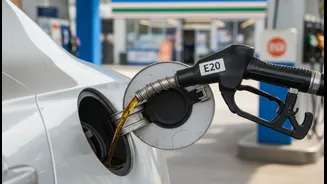
For millions of Indian households, the cost of fuel has become a significant and inflexible part of the monthly budget. With petrol prices consistently hovering over the ₹100 per litre mark in many cities, the simple act of filling up a car is a constant
reminder of the high cost of mobility. This sustained price pressure is a key factor driving consumers to look for more economical alternatives. The volatility of global crude oil markets means that relief is often temporary, prompting a long-term re-evaluation of vehicle ownership costs. This economic reality has set the stage for a major shift in the automotive market, with more buyers asking if there’s a cheaper way to run a car.
The Shifting Sales Pitch for EVs
The argument for electric vehicles (EVs) is increasingly centred on economics rather than just environmentalism. In June 2026, electric passenger vehicle sales saw a massive 107.75% year-on-year growth, indicating a sharp rise in consumer adoption. Projections suggest that annual EV sales in India are on track to cross 300,000 units for the first time in 2026, a clear sign of mainstream acceptance. This boom is not just a trend; it's a direct response to the rising cost of traditional fuels, with many consumers now focusing on the total cost of ownership over a vehicle's lifetime, not just the initial sticker price.
Calculating the Real Running Costs
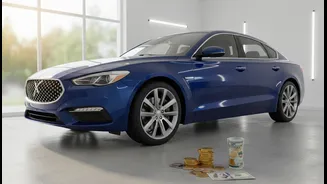
The most compelling argument for EVs lies in their dramatically lower running costs. A petrol car with a real-world mileage of about 14-15 km/l costs roughly ₹7 per kilometre to run, assuming fuel at ₹100 per litre. In stark contrast, an EV charged at home with a typical residential electricity tariff of ₹8 per unit costs only about ₹1.2 to ₹1.5 per kilometre. For a driver covering 1,200 kilometres a month, this translates into a monthly fuel bill of around ₹8,500 for a petrol car, versus just ₹1,280 for an EV. Over a year, the savings can easily exceed ₹80,000, making the financial appeal of EVs difficult to ignore.
Tackling the Upfront Price Hurdle
The biggest obstacle for many prospective EV buyers remains the higher initial purchase price compared to equivalent petrol models. This is largely due to the high cost of the battery pack. However, this gap is being addressed by government incentives. While there is no direct central government subsidy for private electric cars in 2026, structural benefits like a lower 5% GST rate (compared to 28% plus cess for many petrol cars) and state-level waivers on road tax and registration fees provide significant relief. These waivers can be worth ₹1.5 to ₹2 lakh on a mid-range EV, substantially narrowing the price difference.
The Overlooked Savings in Maintenance
Beyond fuel, EVs offer considerable savings on maintenance. An electric motor has far fewer moving parts than an internal combustion engine, eliminating the need for regular oil changes, filter replacements, and spark plug servicing. Annual service costs for an EV can be 40-60% lower than for a petrol car. Over a five-year period, an EV owner might spend around ₹15,000-₹35,000 on maintenance, compared to ₹50,000-₹80,000 for a petrol car. Even brake pads tend to last longer on EVs due to regenerative braking, where the electric motor helps slow the car down.
Infrastructure and Range Anxiety
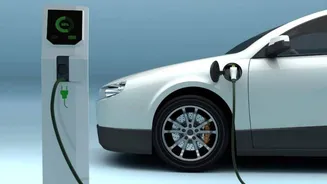
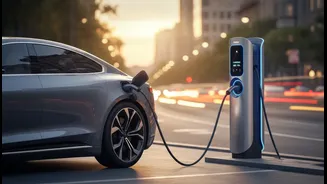
Concerns about charging infrastructure and driving range continue to be a talking point, though the situation is improving rapidly. India has seen a nearly fivefold increase in public charging stations between late 2022 and late 2024. While the network is still expanding and may not be adequate everywhere, the growth is significant. For most current owners, home charging remains the primary and most cost-effective solution, covering the majority of daily commuting needs. Modern EVs now offer real-world ranges of 300-500 kilometres, which is more than sufficient for typical urban use and many inter-city trips.