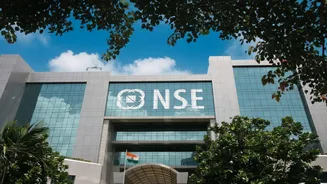










What is an Offer for Sale (OFS)?
First, let's break down the jargon. An Initial Public Offering (IPO) is when a company sells its shares to the public for the first time. This can happen in two main ways: a fresh issue of shares or an Offer for Sale (OFS). In a fresh issue, the company creates
new shares and the money raised goes directly to the company for its business needs like expansion or debt reduction. An OFS, however, is different. In this structure, existing shareholders—like early investors, promoters, or large institutions—sell their own shares to the public. The proceeds from this sale go to the selling shareholders, not the company itself. The NSE's IPO is structured as a 100% OFS, meaning the exchange is not raising any new capital for its own operations.
Who is Selling and Who is Not?
The NSE's IPO provides an exit route for many of its long-term institutional investors. According to its draft prospectus filed in June 2026, the issue will involve the sale of nearly 14.9 crore shares, which is about 6% of the company's equity. The list of sellers is a who's who of India's financial sector. State Bank of India (SBI) is set to be the largest seller, offloading up to 2.48 crore shares. Other significant sellers include MS Strategic (Mauritius), Canada Pension Plan Investment Board, Bank of Baroda, and several public-sector insurance companies like General Insurance Corporation, New India Assurance, National Insurance Company, and United India Insurance. Interestingly, Life Insurance Corporation of India (LIC), the single largest shareholder with a 10.72% stake, has opted not to sell any of its shares in the IPO.
How Does a 100% OFS Affect the IPO?
A complete OFS sends mixed signals to the market. On one hand, it shows that the company is not in need of fresh funds for growth, which can be a sign of a strong, self-sustaining business with a healthy balance sheet. NSE is a highly profitable entity, boasting one of the highest profit margins among global exchanges. On the other hand, a 100% OFS can also be interpreted as early investors believing that the company's valuation has peaked, and they are choosing to cash out. This can make potential new investors cautious. The structure means investors are buying into the company's existing strength rather than funding its future growth, which changes the investment thesis from a growth-capital story to a value-and-dividend play.
The Impact on IPO Demand and Valuation
The OFS structure is a crucial factor in shaping investor demand. With an estimated issue size of around ₹30,000 crore and a potential valuation exceeding ₹5 lakh crore, the NSE IPO is set to be one of India's largest. For institutional investors, the appeal lies in owning a piece of critical market infrastructure that essentially acts as a toll booth on India's financial highway. NSE's dominant market share in equity and derivatives trading makes it a formidable player. However, for retail investors, the perception that founding investors are exiting might temper enthusiasm. The final pricing will be key. If the valuation is perceived as too high, especially when early backers are selling, it could dampen demand. Conversely, the sheer scale and brand recognition of NSE, coupled with its robust financials, could still attract strong interest from investors seeking a stable, long-term holding.
What This Means for the Broader Market
The NSE listing, which had been delayed for nearly a decade due to regulatory hurdles, is a landmark event for Indian capital markets. A successful IPO of this magnitude can boost overall market sentiment and attract significant foreign capital. The fact that the exchange itself is listing provides a new avenue for investors to bet on the 'financialisation' of the Indian economy—the very trend that NSE facilitates. However, such a large issue can also temporarily absorb liquidity from the secondary market, as investors might sell existing holdings to free up cash for the IPO application, potentially causing short-term volatility. The listing will also be unique as NSE shares will be listed on its rival exchange, BSE, as per regulatory guidelines.