




The Ultimate Everyday Hair Hack
In a world of complicated beauty routines and expensive accessories, the pencil bun stands out for its sheer simplicity and resourcefulness. It's an effortlessly chic style that has saved countless students, artists, and office workers from the tyranny
of a stray hair tickling their face. The beauty of this technique lies in its accessibility; whether you're in a library, a meeting, or your kitchen, a pencil or pen is usually within arm's reach. This isn't just a last-resort style. It’s a testament to the idea that elegance doesn’t require complexity. A pencil bun can look just as put-together as an updo created with a dozen bobby pins, but it takes a fraction of the time and effort. It also puts less direct pressure on a single band of hair, potentially reducing the breakage associated with tight elastic ties. This hairstyle is a modern take on an ancient practice; hair sticks have been used for thousands of years across cultures like ancient Egypt, Rome, and China to secure hair. The humble pencil is simply today’s version of this timeless tool.
How to Create the Perfect Pencil Bun: A Step-by-Step Guide
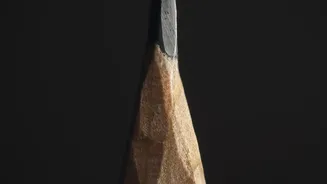
Mastering the pencil bun is easier than it looks. With a little practice, you'll be able to sweep your hair up in under a minute. For this, you’ll want a standard wooden pencil that isn’t sharpened to a fine point, or even a chopstick, to avoid poking your scalp or snagging your hair. First, gather all your hair at the nape of your neck or higher up on your head, as if you’re making a ponytail. Hold the base securely with one hand. Second, begin twisting the entire length of the ponytail into a tight, uniform coil. The tighter you twist the hair, the more secure your bun will be. Third, wrap the twisted coil around its own base, forming a neat, circular bun. Keep your hand over the bun to hold it in place against your head. Tuck the ends of your hair underneath the bun. Finally, take your pencil and slide it through the top edge of the bun. The key is to weave it: push the pencil down so it catches some of the hair against your scalp underneath the bun, and then push it back up through the other side of the bun. This creates a locking mechanism that holds everything securely. You’ll know you’ve done it right when the bun feels stable without being painfully tight.
Tips for Different Hair Types and Textures
While the pencil bun is universally achievable, a few adjustments can make it work better for your specific hair type. For those with fine or silky, straight hair, the main challenge is getting the bun to hold without slipping. Before you start, try adding a bit of texture with dry shampoo or a texturizing spray. When twisting your hair, make the coil as tight as possible. You might also find that a slightly rougher wooden pencil or chopstick provides more grip than a smooth plastic pen. If you have very thick or long hair, you may need a sturdier tool. A thicker, lacquered chopstick or even two pencils held together can provide the necessary support. When you insert the pencil, make sure you are weaving through a substantial portion of the bun and the base hair to secure the weight. For curly or textured hair, the natural grip of your hair is a major advantage. The challenge here is avoiding tangles. Make sure your hair is detangled before you begin. You can create a looser twist and bun, as the texture of your hair will help hold the style in place without needing extreme tension. A smooth, well-rounded pencil is ideal to prevent snagging on your beautiful curls.
Avoiding Common Mistakes and Hair Damage
Although a pencil bun is a fantastic alternative to tight elastics, any hairstyle that puts repeated stress on your hair follicles can potentially cause damage or breakage over time, a condition known as traction alopecia. To keep your hair healthy, it's best to vary your hairstyles and not wear your bun in the exact same spot every single day. Also, avoid pulling your hair excessively tight at the hairline. The goal is a secure hold, not a painful facelift. Make sure your pencil or chosen tool is smooth and clean. A pencil with a jagged edge or a leaky pen can snag and damage hair strands. It’s also wise not to create a bun with wet hair, as hair is more fragile and prone to breaking when damp. If you find your bun creates significant tangles, it may be a sign that you're wrapping it too tightly or your hair was not fully detangled to begin with.