





What is the PUFFINS Mission?
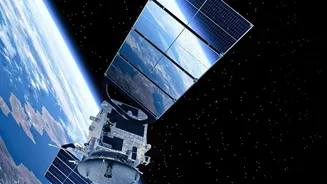
PUFFINS is an acronym for a rather technical name: Polarimetry in the Ultraviolet to Find Features in INterStellar dust. At its heart, it is a small satellite, or 'SmallSat', mission funded by NASA. Selected as part of the agency's Astrophysics Pioneers
program, the project has a budget of $20 million and is being led by a team at the University of Arizona. Unlike massive, multi-purpose space observatories, PUFFINS is a specialized tool designed to do one job extremely well. Its focus is on the seemingly empty space between stars, which astronomers know is filled with clouds of gas and microscopic particles known as interstellar dust. The mission is currently in its development phase, with a targeted launch set for 2030, confirming its status as a planned but not-yet-operational project.
A Leader with Indian Roots
A notable aspect of the mission, particularly for Indian audiences, is its leadership. The Principal Investigator for PUFFINS is Dr. Ramya Anche, a Bengaluru-born astronomer who is now an assistant research professor at the University of Arizona's Steward Observatory. Her selection places a scientist of Indian origin at the helm of a competitive and significant NASA mission. The collaboration extends further, with Indian institutions like the Inter-University Centre for Astronomy and Astrophysics in Pune and the Indian Institute of Astrophysics in Bengaluru also involved in this global scientific effort. This project highlights the growing role of Indian scientific talent in pioneering international space research.
The Science of Stardust
So, what exactly will PUFFINS be looking for? The mission's target is the smallest grains of interstellar dust, some no larger than a common cold virus at less than 50 nanometres in size. These tiny particles are nearly invisible to most telescopes, yet they have a profound impact on the cosmos. They affect how starlight travels through our galaxy, and they are a fundamental building block in the formation of new stars and planets. By studying these grains, scientists hope to solve long-standing mysteries about how planetary systems, including our own, come into being. The mission will observe the ultraviolet light from approximately 70 distant stars to see how it is altered as it passes through these dust clouds.
Reviving a Lost Technique
To achieve its goals, PUFFINS will employ a powerful technique called ultraviolet (UV) spectropolarimetry. Essentially, the satellite's 10-inch telescope will measure the polarization of starlight—the orientation of light waves—in the UV spectrum. Elongated dust grains tend to align with the galaxy's magnetic field, and this alignment leaves a unique polarizing signature on the light that passes through them. By capturing this signature, scientists can deduce the dust's composition, size, and alignment, providing invaluable data on both the dust itself and the galactic magnetic fields that shape it. Remarkably, this technique has not been used from space for this specific purpose in nearly three decades, meaning PUFFINS will fill a massive gap in our astronomical knowledge.
Why This Small Satellite Matters
In an era of giant telescopes, a small, focused mission like PUFFINS might seem modest. However, its impact could be enormous. The data it collects will provide critical insights into the lifecycle of stars and the raw materials that form planets. This research is not just academic; it helps us understand our own cosmic origins. Furthermore, PUFFINS serves as a crucial technological pathfinder. The mission will test and refine UV polarimetry technologies that will be vital for future, even more ambitious projects, such as NASA’s proposed Habitable Worlds Observatory (HWO), which will search for signs of life on planets beyond our solar system. By proving the effectiveness of this approach on a smaller scale, PUFFINS paves the way for the next generation of space exploration.