

What Happened This Week
On Tuesday, an Air India flight from Phuket to New Delhi with 137 passengers encountered a moment of severe turbulence. The aircraft experienced a sudden loss of altitude, which, while momentary, resulted in injuries to 13 passengers and four crew members.
After the event, the plane continued to its destination and landed safely, but those injured required hospital evaluation. This incident, along with another on Monday where severe weather over Colorado forced 22 flights to divert and caused several injuries, underscores a critical and often ignored aspect of flight safety.
The Invisible Threat: Clear-Air Turbulence
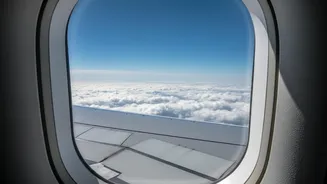
While many associate turbulence with storm clouds, the most unpredictable form is often invisible. Known as clear-air turbulence (CAT), it is the turbulent movement of air masses in the absence of visual clues like clouds. CAT occurs when bodies of air moving at different speeds meet, often near high-altitude jet streams—the fast-moving rivers of air that planes use to fly more efficiently. Because it cannot be seen by the naked eye or conventional weather radar, it can occur without any warning, turning a smooth flight into a chaotic one in an instant. This is why the seatbelt sign may not be on when an aircraft encounters it.
The Simple Physics of Injury
During severe turbulence, an aircraft can experience abrupt changes in altitude and g-forces. While the plane itself is built to withstand these stresses, unsecured objects—including people—are not. An unbelted passenger essentially becomes a projectile. A sudden downdraft can lift a person out of their seat towards the cabin ceiling, and the subsequent corrective movement of the aircraft can bring them crashing back down. Aviation authorities note that in severe turbulence, occupants can be forced violently against their belts; without them, the potential for serious injury to the head and limbs is extremely high. Most turbulence-related injuries are not caused by the plane crashing, but by people being thrown around inside the cabin.
Why 'Seatbelt Sign Off' Isn't a Pass
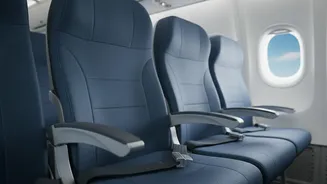
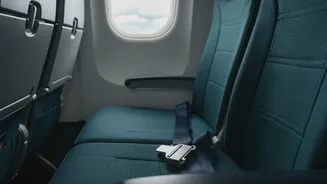
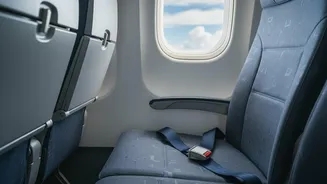
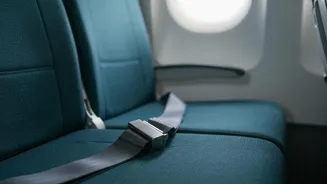
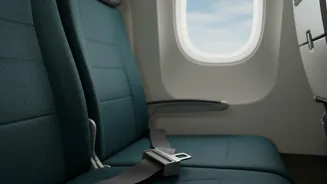
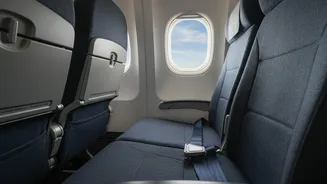
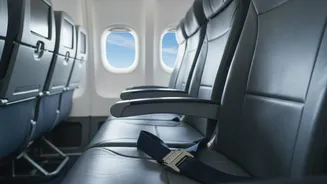
For many flyers, the sound of the seatbelt sign being switched off is a signal to unbuckle and relax. However, flight attendants and aviation experts will tell you something different: keep it fastened whenever you are seated. The Federal Aviation Administration (FAA) requires passengers to be buckled during specific phases of flight like takeoff and landing, and whenever the sign is on. But their strong recommendation is to keep your seatbelt on at all times when seated. This simple act is the single most effective way to protect yourself from the unexpected. The crew is often the most at risk, as their duties require them to be on their feet, which is why a majority of turbulence-related injuries affect flight attendants.
The Constant in a Changing Sky
Modern aircraft are engineering marvels designed to handle even the most severe turbulence. The risk of a plane crashing due to turbulence is practically zero. However, the risk of personal injury is real, albeit statistically low. The critical takeaway from any turbulence incident is that the primary danger is not to the aircraft, but to those inside it. A seatbelt is not just a regulatory requirement; it is a simple, passive restraint system that works instantly when needed. It requires no special action in the moment of panic and protects against the sudden, violent movements that cause the most harm.