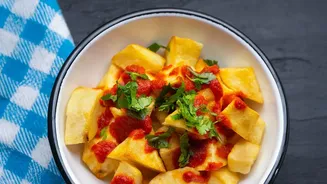








The Soul of Simplicity: Aloo Posto
In the heart of a Bengali kitchen, comfort often takes the form of Aloo Posto. This classic dish is a masterclass in minimalism and subtlety. It features tender cubes of potato cooked in a creamy, nutty paste of white poppy seeds (posto). The flavour
profile is gentle, allowing the earthy taste of the potato to shine through, complemented by the sharp, pungent notes of mustard oil and the subtle heat of green chillies. Unlike many Indian curries, Aloo Posto is traditionally made without onion or garlic, relying instead on the core trinity of potato, poppy seeds, and mustard oil for its signature taste. It is a dish deeply rooted in Bengali culture and history, often associated with warm memories and home-cooked meals. Typically served with steamed rice and a simple dal, it's considered a calming, soulful dish, perfect for a quiet lunch that often leads to a contended afternoon siesta.
The Heartbeat of the Hustle: Batata Vada
Travel west to the bustling streets of Mumbai, and you'll find the potato in its most energetic and explosive form: the Batata Vada. This is not a dish of quiet contemplation; it's the city's favourite fast food, designed to be eaten on the go. The preparation is a burst of flavour from the start. Boiled and mashed potatoes are mixed with a potent combination of ginger, garlic, green chillies, turmeric, and curry leaves. This spicy mixture is then rolled into balls, dipped in a thick batter of chickpea flour (besan), and deep-fried to a perfect golden crisp. The result is a delightful contrast in textures — a crunchy outer layer giving way to a soft, spicy, and fluffy potato filling. Served hot with fiery green chutney or a dry garlic-coconut powder, the Batata Vada is the quintessential Mumbai street snack. It is most famously nestled inside a soft bread roll (pav) to create the iconic Vada Pav, the affordable and deeply satisfying meal that fuels the entire city.
A Tale of Two Tastes
Comparing Aloo Posto and Batata Vada is like comparing two different philosophies that happen to share a common language—the potato. The differences are stark and revealing. Aloo Posto is simmered gently, a slow-cooking process that coaxes out subtle flavours. Batata Vada is born of hot, fast oil, a technique that creates a bold, crisp exterior. The flavour of Aloo Posto is nutty and delicate, defined by poppy seeds and the pungency of mustard oil. Batata Vada, on the other hand, is an assault on the senses in the best way possible, loaded with garlic, chilli, and a host of other spices. Culturally, they occupy opposite ends of the spectrum. Aloo Posto is the epitome of Bengali comfort food, a dish for the home that evokes a sense of peace and tradition. Batata Vada is the food of the street, a symbol of Mumbai's relentless pace and vibrant energy.
One Tuber, A Nation of Flavours
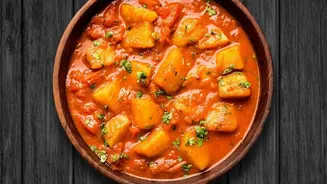
The contrast between the gentle posto and the crisp vada tells a larger story about the potato in India. Since its introduction, the potato has become a beloved canvas for regional creativity. It is a testament to the adaptability of Indian cuisine that a single vegetable can be interpreted in such profoundly different ways. From the rich, tomato-based gravy of Dum Aloo in Kashmir to the spiced patties of Aloo Tikki popular across the north, every region has claimed the potato as its own. It is stuffed into parathas, added to biryanis, and transformed into countless curries and snacks. The journey from the subtle comfort of Aloo Posto to the vibrant punch of Batata Vada showcases not just the versatility of the potato, but the incredible diversity of India's culinary landscape. Each dish is a reflection of its region's palate, history, and way of life.