




A Global Stamp of Approval
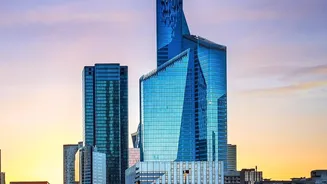
The project's success was recently cemented with a significant honor from the Prix Versailles, an annual architectural award presented in partnership with UNESCO. The Part-Dieu development was named to the 2026 list of the World's Most Beautiful Stations,
a category that celebrates transport hubs for their innovation, sustainability, and positive community impact. This award doesn't just look at aesthetics; it recognizes projects that intelligently blend architecture with culture and ecology. By including Lyon Part-Dieu, the jury highlighted how a transport-focused area can be transformed into a vibrant public space that enhances urban life rather than just processing commuters. The recognition validates a long and complex journey of urban reinvention.
Rewinding to the Old Part-Dieu
To understand the scale of this achievement, one must picture the Part-Dieu of the past. Conceived in the 1960s and 70s, it was a classic example of car-centric urban planning. As France's second-largest business district after La Défense in Paris, it was dominated by office towers, a massive and introverted shopping centre, and multi-lane roads that sliced it off from the rest of the city. The district was functional but lacked soul—a place people passed through, not a place they wanted to stay. Over time, many of its buildings became dated, and the area grew saturated and disconnected, a 'concrete jungle' that prioritized vehicles over people.
A Decade of Visionary Change
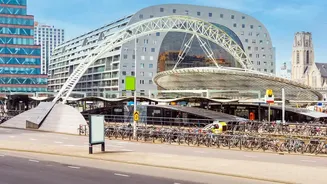
The transformation, guided by architecture and urban planning firm AUC, was a radical rethink. Instead of demolishing and starting from scratch—a process that would have generated enormous waste—the project focused on regeneration. One of the most dramatic changes was the overhaul of the Westfield La Part-Dieu shopping centre. Its once-imposing concrete facade was preserved but updated, and parts of it were made to 'evaporate' into large glass windows, opening the building to the city. A former car park was replaced with additional retail and public areas, and a vast rooftop park with gardens and restaurants was added, creating a new public space with stunning city views. The surrounding streets were pedestrianized, and 600 trees were planted, turning traffic arteries into green corridors.
More Than Just Buildings
The core philosophy was about creating connections. The redesigned train station, which now handles a vast number of connecting passengers, was expanded and opened up with new access points. It was reconceived not just as a station but as a public square, a shortcut between neighbourhoods inspired by Lyon's historic hidden passageways, known as 'traboules'. This approach aimed to make the entire district more porous and integrated. The goal was to shift Part-Dieu from a monofunctional business hub that emptied out after 6 p.m. into a lively, mixed-use district with housing, culture, and recreation—a place to live, work, and relax. It’s a vision that reconciles a high-performance economic centre with a pleasurable, livable city.
A Lesson for Urban India?
The success of Lyon Part-Dieu offers a compelling model for rapidly expanding cities across the world, including in India. Many Indian cities are grappling with the legacy of mid-20th-century planning, characterized by congested business districts, a lack of quality public spaces, and infrastructure that prioritizes cars over pedestrians. The Lyon project demonstrates that urban renewal doesn't have to mean total demolition. By sustainably reusing existing structures, prioritizing green spaces, and focusing on the human experience, it’s possible to transform aging urban cores into vibrant, modern, and sustainable hubs. As Indian metropolises continue to grow, the principles of integrating transport, commerce, and community life seen in Part-Dieu provide a valuable blueprint for creating cities that are not only economically dynamic but also wonderful places to live.