







A Hymn Is Born
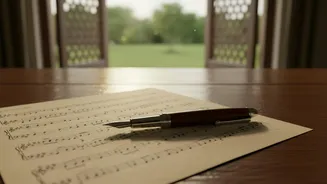
The story begins on December 11, 1911, when Rabindranath Tagore composed a five-stanza hymn in a highly Sanskritised form of Bengali, titled 'Bharoto Bhagyo Bidhata'. It was not written as a national anthem but as a Brahmo hymn, a devotional song reflecting
India's spiritual core and diverse fabric. The first public performance of the song's first stanza took place on December 27, 1911, at the Calcutta session of the Indian National Congress. It was sung by Tagore's niece, Sarala Devi Chowdhurani, and a group of schoolchildren before prominent Congress leaders. This performance marked the song's entry into the public consciousness, setting it on a path its creator had not originally envisioned.
The King George V Controversy
The song's debut coincided with King George V's visit for the Delhi Durbar, leading to a persistent myth. Pro-British newspapers in Calcutta incorrectly reported that Tagore's composition was a song of fealty to the visiting monarch. This false narrative has endured for over a century, despite Tagore's own forceful refutations. In a 1937 letter, he expressed his disdain for the rumour, stating, "I should only insult myself if I cared to answer those who consider me capable of such unbounded stupidity." He clarified that the 'Bhagya Bidhata' (Dispenser of Destiny) was the eternal charioteer of India's history, not a temporal British king. The song sung in the Emperor's honour was a different one, composed by another writer for the occasion.
Voice of the Freedom Struggle
Despite the initial controversy, 'Jana Gana Mana' gradually became intertwined with the independence movement. Its journey was significantly boosted in 1919 when Tagore visited the Besant Theosophical College in Madanapalle, Andhra Pradesh. He sang the song for the students, who were captivated by it. At the request of the college's vice-principal, Margaret Cousins, Tagore created an English translation titled 'The Morning Song of India'. Later, it gained further prominence when Subhas Chandra Bose adopted a Hindustani version, 'Subh Sukh Chain', as the anthem for the Indian National Army (INA) in 1941. The song was even played by the Radio Symphony Orchestra of Hamburg in 1942, giving it an international stage.
The Great Anthem Debate
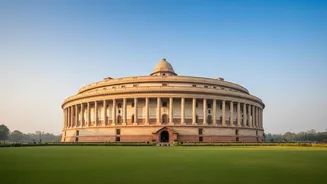
When India achieved independence, the Constituent Assembly faced the delicate task of choosing a national anthem. 'Jana Gana Mana' was a strong contender, having been sung at the close of the historic midnight session on August 14, 1947. However, it was not the only choice. 'Vande Mataram', from Bankim Chandra Chatterjee's novel 'Anandamath', was another powerful claimant. It had been a rallying cry for freedom fighters for decades and held immense emotional weight. The Assembly members were divided. Some argued for 'Vande Mataram' due to its deep roots in the freedom struggle, while others preferred 'Jana Gana Mana' for its more inclusive and stately tone, reflecting the pluralism of the new nation.
A Republic's Decision
The decision came on January 24, 1950, just two days before India formally became a republic. The President of the Constituent Assembly, Dr. Rajendra Prasad, announced a resolution that sought to honour both songs. He declared that 'Jana Gana Mana' would be the National Anthem of India. Simultaneously, he stated that 'Vande Mataram', because of its historic role, would be honoured equally and would have the status of a National Song. This compromise acknowledged the legacy of both compositions. The first stanza of 'Bharoto Bhagyo Bidhata' officially became the song that would represent the sovereign Republic of India to the world, a symbol of its unity in diversity.