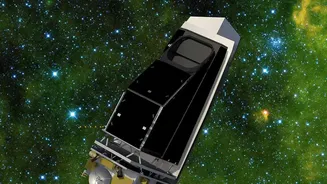

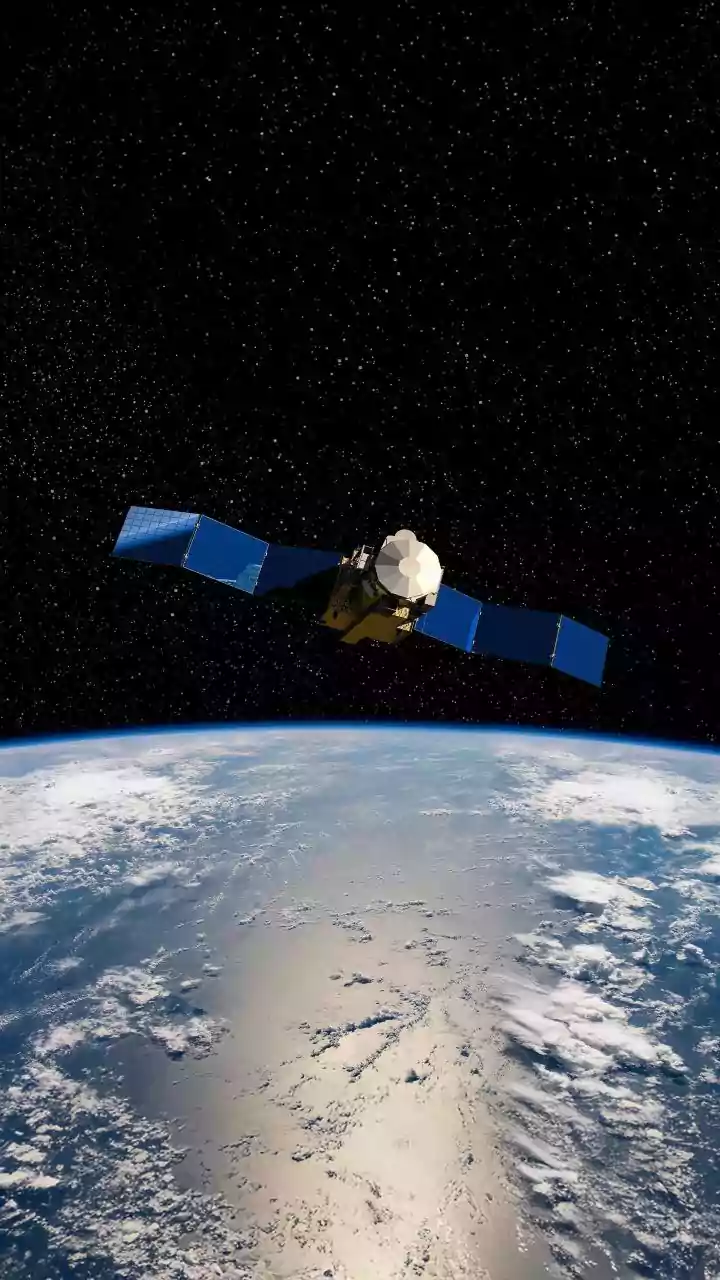

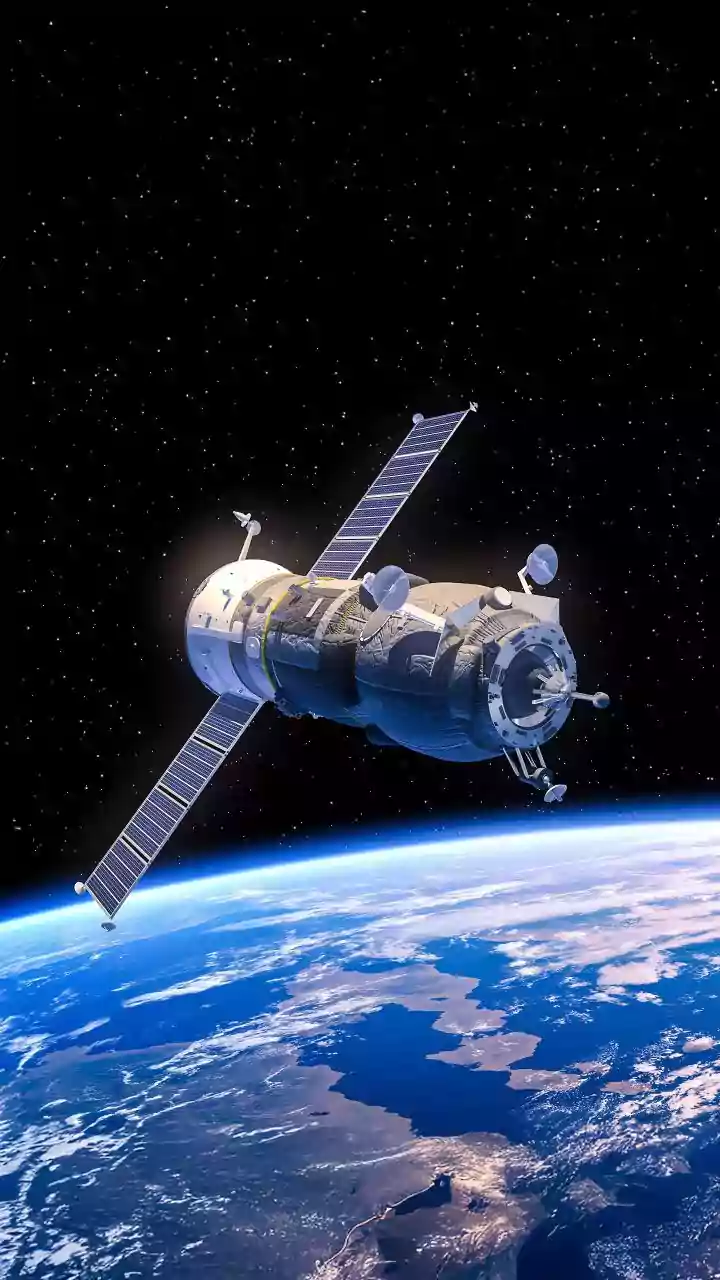

NASA is adding a powerful new eye in the sky. The PRIMA telescope, its first 'Probe Explorer' mission, will peer into the cosmic dark to answer fundamental questions by seeing light that has long been invisible to even our best observatories.
A New Class of Cosmic Explorer
NASA recently
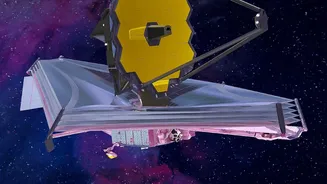
announced it has officially selected the PRobe far-Infrared Mission for Astrophysics, or PRIMA, to move forward into its next phase of development. This marks a significant milestone, as PRIMA is the very first mission in a new category called Probe Explorers. Recommended by the top scientific advisory bodies in the United States, this class of mission is designed to fill a strategic gap. They are more ambitious and costly than the smaller 'Explorer' missions but less expensive than massive flagship observatories like the James Webb Space Telescope (JWST). With a project cost capped at approximately $1.2 billion, these Probe missions will tackle high-priority science without straining the entire agency budget, allowing for a more consistent cadence of major scientific projects. Following a detailed review of its design and technology, PRIMA is targeted for launch no earlier than 2033 for a planned five-year mission.
Seeing the Universe in a New Light
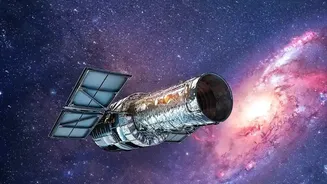
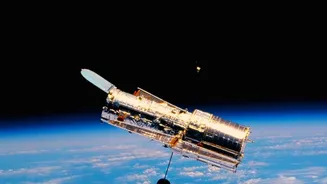
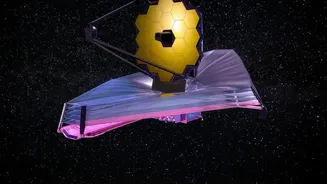
So, what makes PRIMA special? It all comes down to the kind of light it can see. While the Hubble telescope sees primarily visible light and the JWST is a champion of near- and mid-infrared light, there’s a crucial portion of the spectrum that remains largely unexplored: the far-infrared. This is the gap that PRIMA is built to fill. It will observe wavelengths from 24 to 235 micrometres, bridging the divide between what JWST can detect and the much longer wavelengths seen by ground-based radio telescopes like the Atacama Large Millimeter/submillimeter Array (ALMA). By detecting this specific type of radiant energy, which is often emitted by very cold or dust-obscured objects, PRIMA will give humanity a new window into processes that are currently invisible. To do this, its 1.8-metre (5.9-foot) mirror will be cryogenically cooled to an incredibly cold 4.5 Kelvin, preventing the telescope's own heat from overwhelming the faint cosmic signals it seeks.
Unlocking Cosmic Secrets
By opening this far-infrared window, PRIMA will tackle some of the biggest questions in modern astrophysics. Its three main scientific goals are to explore the origins of exoplanets, trace the evolution of galaxies and their supermassive black holes, and understand how cosmic dust and heavy elements have accumulated over time. For instance, certain spectral lines for water are only visible in the far-infrared, meaning PRIMA will be able to quantify the role water plays in the formation of new planets—something even the mighty JWST cannot do. It will also peer deep into the history of the universe to study how the very first stars and galaxies formed and grew. Closer to home, PRIMA could even spot undiscovered objects in the Kuiper Belt at the edge of our own solar system.
A Suite of Powerful Instruments
To achieve its ambitious goals, PRIMA will carry two primary instruments. The Far Infrared Enhanced Survey Spectrometer (FIRESS) will analyse the composition of cosmic objects by breaking their light down into a spectrum, much like a prism. The second instrument, the PRIMA Imager (PRIMAger), will take wide-field pictures of the sky in far-infrared light. These instruments use a new generation of extremely sensitive detectors that are a massive leap forward from previous far-infrared missions like the Herschel Space Observatory and Spitzer Space Telescope. This enhanced sensitivity will allow PRIMA to survey the sky faster and detect far fainter objects than ever before, revealing the hidden physics behind everything from star birth to the violent outflows powered by active black holes.