






A Tale of Two Samples
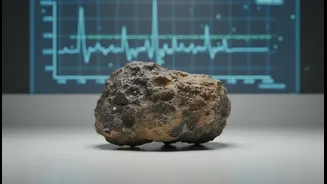
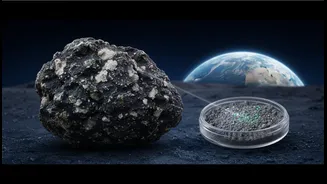
For decades, scientists have studied two types of lunar samples. The first are the precious rocks brought back by missions like Apollo. The second are lunar meteorites—pieces of the Moon knocked into space by asteroid impacts that eventually fall to Earth.
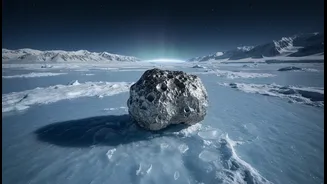
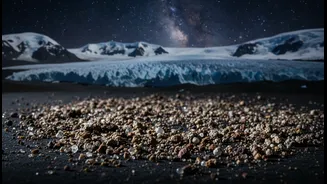
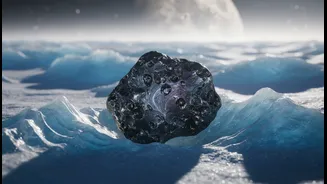
One such meteorite, named Allan Hills 81005 (ALHA 81005), was found in Antarctica in 1982 and was the very first rock confirmed to have come from the Moon. The puzzle has always been the same: we have the rock, but we don't know its original location on the lunar surface. Without this context, understanding what it tells us about the Moon's history is like reading a single page from a book with no cover. This is where India's Pragyan rover enters the story, providing the ground truth that scientists have been waiting for.
The Shiv Shakti 'Ground Truth'
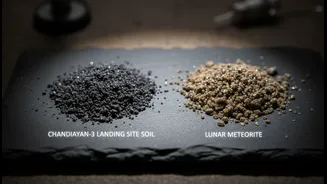
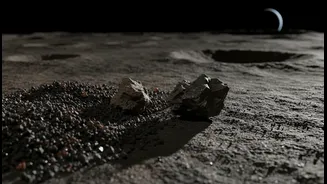
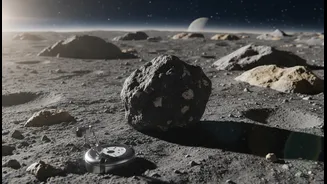
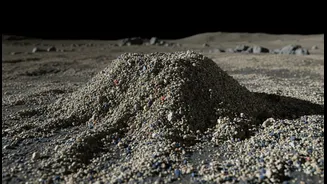
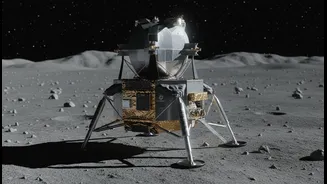
When the Vikram lander touched down at the Shiv Shakti point near the lunar south pole on August 23, 2023, it placed its instruments on a surface never before explored in-situ. The Pragyan rover, equipped with its Alpha Particle X-ray Spectrometer (APXS), got to work analyzing the chemical composition of the soil. A recent study by scientists at the Physical Research Laboratory (PRL), Ahmedabad, has now revealed a stunning connection. The geochemical makeup of the soil at Shiv Shakti station is a near-perfect match for the meteorite ALHA 81005, which has been sitting in labs on Earth for over 40 years.
A Striking Chemical Similarity
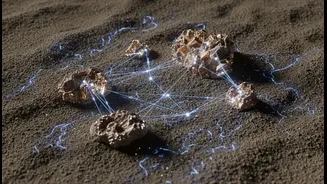
The match is remarkably close. Scientists compared the rover's data with 66 known lunar meteorites and found ALHA 81005 was the clear winner. Both the Antarctic meteorite and the Shiv Shakti soil have nearly identical amounts of aluminum oxide (about 26%) and a combined total for iron and magnesium oxides (around 14%). These values are distinct from the typical lunar highlands, which are richer in aluminum and poorer in iron and magnesium. ISRO officials clarified that this doesn't mean the exact rock that became the meteorite came from the rover's specific location. Rather, it indicates that both samples represent the same type of magnesium-rich lunar crust, a geological environment that now, thanks to Chandrayaan-3, has a known address on the Moon's south pole.
A Mixed and Complex History
The findings do more than just link two samples; they paint a picture of a geologically complex region. The soil at Shiv Shakti isn't from a single rock type but is a mixture of materials from different layers of the Moon's crust. Scientists believe that over billions of years, massive impacts—perhaps including the one that formed the gigantic South Pole-Aitken basin nearby—excavated rocks from deep within the Moon and scattered them across the surface. This process, known as impact gardening, has churned up ancient materials, giving the rover access to a diverse geological record. The soil contains fragments from the upper crust as well as magnesium-rich rocks likely derived from the Moon's deeper layers.
India's Lasting Scientific Footprint
The discovery underscores the long-term value of space missions. While the landing itself was a historic moment of triumph for India, the meticulous analysis of the data gathered in just a few days continues to yield profound scientific breakthroughs. This connection between the in-situ readings at Shiv Shakti and a physical sample on Earth validates the work of both the ISRO engineers who built the instruments and the planetary scientists who study meteorites. It provides a crucial reference point for understanding the formation of the Moon's ancient crust and proves that the scientific legacy of Chandrayaan-3 is just beginning. For India, the mission has transitioned from a spectacular landing to a source of lasting scientific credibility on the global stage.