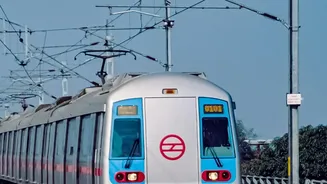






The ambitious plan to reshape travel in the National Capital Region is taking another leap forward. A proposal to extend the Delhi-Panipat Namo Bharat corridor all the way to Karnal promises to redefine connectivity for millions in Haryana.
The Core Project: Delhi to Panipat
The foundation
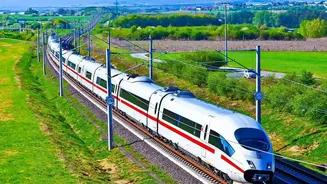
of this new link is the Delhi-Panipat Regional Rapid Transit System (RRTS), one of the key corridors planned by the National Capital Region Transport Corporation (NCRTC). Designed to ease the immense pressure on National Highway 44, this semi-high-speed rail line aims to connect Delhi with the industrial and residential hubs of Sonipat and Panipat. The project is part of a larger vision to create a network of high-speed 'Namo Bharat' trains, similar to the operational Delhi-Meerut corridor, which drastically reduces travel time and offers a reliable, modern commuting alternative. The initial plan focused on a 103-km stretch, but its strategic importance soon led to calls for expansion.
Expanding the Vision: The Karnal Extension
Recognising the potential for even greater regional integration, the Haryana government championed the extension of the corridor from Panipat to Karnal. This extension adds approximately 33 km to the route, bringing the total length to about 136 km. Recent approvals from the Haryana government, the central government, and the National Highways Authority of India (NHAI) have solidified this plan, turning what was once a proposal into a project with clear momentum. The combined Delhi-Panipat-Karnal corridor is now a single, integrated project poised to connect a major agricultural and industrial belt directly to the national capital.
A Game-Changer for Travel Time
The most significant impact for daily commuters and travellers will be the dramatic reduction in travel times. The journey from Delhi to Panipat, which currently takes over two hours by road, is expected to be completed in just one hour via the Namo Bharat train. The trip to Karnal, which can take up to four hours, will be cut down to a mere 90 minutes. With trains designed to operate at speeds of 160 km/h and run at a frequency of every 5 to 10 minutes, this corridor promises not just speed but also remarkable convenience.
Route, Stations, and Connectivity
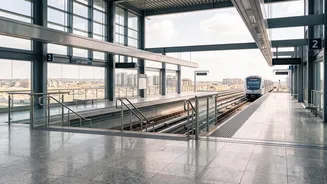
The corridor will originate from Sarai Kale Khan in Delhi, a major transport hub that will offer interchange facilities with other RRTS lines, the Delhi Metro, and the Hazrat Nizamuddin railway station. From there, it will proceed through key Delhi stations like Kashmere Gate and Mukarba Chowk before entering Haryana. The Haryana portion will include numerous stations across Sonipat, Panipat, and Karnal districts, such as Kundli, Murthal, Gannaur, Samalkha, Panipat North, and Gharaunda, before terminating in Karnal. In total, 22 stations are proposed for the entire corridor. Most stations will be elevated, running parallel to NH-44, which simplifies land acquisition and construction.
Economic Boost and Urban Development
This project is more than just a transport link; it is an economic catalyst. The Haryana government has included the corridor under its Transit-Oriented Development (TOD) policy. This move is designed to encourage planned, high-density development of residential, commercial, and mixed-use properties around the new stations. By making cities like Sonipat, Panipat, and Karnal more accessible, the corridor is expected to spur significant real estate growth and attract new investment. It provides an incentive for people to live outside the congested core of Delhi while still having fast and efficient access to it for work and leisure.
Current Status and What's Next
With crucial approvals from state and central bodies now in place, the project is moving towards the construction phase. The total estimated cost is approximately ₹33,051 crore, and the project is targeted for completion by 2030. Preliminary work, such as utility shifting, has already begun on a 22-km stretch between Narela and Murthal. While the final Union Cabinet sanction is awaited, the NCRTC has been conducting preparatory activities, signalling strong confidence that the project will proceed as planned. For the residents and industries along this vital artery, the countdown to a new era of regional mobility has begun.