



Forged in Stellar Fire
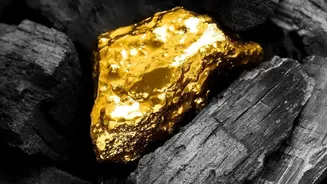
Forget simple star stuff. While stars are incredible factories that fuse light elements like hydrogen and helium into heavier ones like carbon and oxygen, they hit a wall at iron. Creating elements heavier than iron, such as platinum, gold, and uranium,
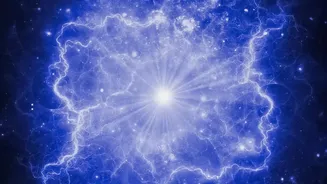
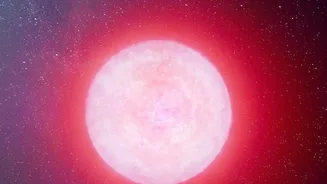
requires an even more extreme environment. For decades, scientists theorized about where this could happen, and now they have an answer: the cataclysmic collision of two neutron stars. Neutron stars are the ultra-dense remnants of massive stars that have died in supernova explosions. A chunk of neutron star material the size of a sugar cube would weigh as much as all of humanity combined. When two of these incredible objects, orbiting each other for millions of years, finally spiral together and merge, they unleash one of the most violent events in the cosmos.
The Universe's Most Extreme Pressure Cooker
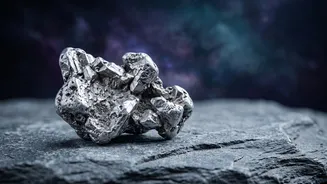
The merger of two neutron stars creates the perfect conditions for what is known as the rapid neutron-capture process, or 'r-process'. In the moments of the collision, an incredibly dense and energetic soup of neutrons is created. Atomic nuclei are bombarded with so many neutrons, so quickly, that they don't have time to radioactively decay. This rapid-fire absorption of neutrons balloons the nuclei into extremely heavy, unstable forms. These then undergo a series of beta decays, where neutrons transform into protons, ultimately settling into stable, heavy elements like platinum. The entire violent process confirms that roughly half of all elements heavier than iron owe their existence to these spectacular cosmic events.
A Treasure Scattered Across the Galaxy
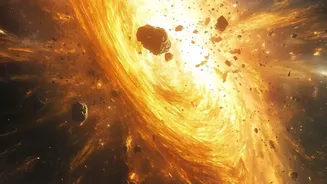
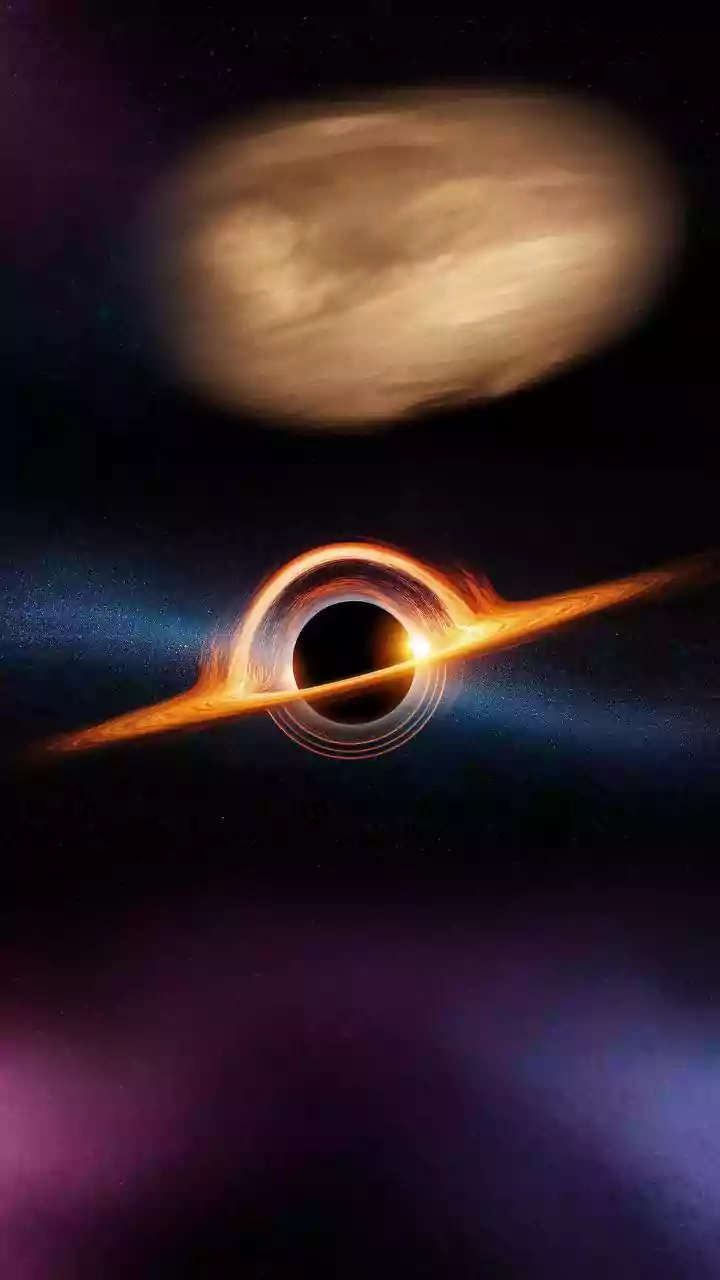
Creating platinum is only half the story; it also had to be distributed across the universe. The collision that forges these heavy elements also triggers a massive explosion known as a kilonova. This explosion blasts the newly created elements, including hundreds of Earth-masses worth of gold and platinum, out into interstellar space at incredible speeds. Over billions of years, this cosmic shrapnel travels across the galaxy, mixing with clouds of gas and dust. These enriched clouds are the raw materials for the next generation of stars and planets, ensuring that the legacy of a single, ancient collision is seeded throughout the cosmos.
Delivery to a Young Earth
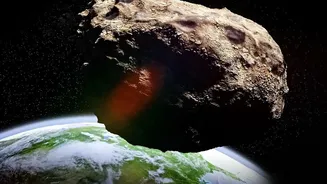
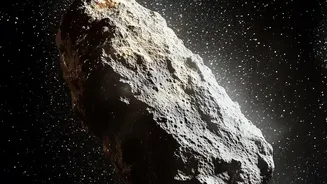
When Earth first formed over 4.5 billion years ago, it was a molten ball of rock. During this phase, heavy, iron-loving elements like platinum sank deep into the planet’s core, a process called planetary differentiation. This should have left the crust and mantle almost entirely devoid of these precious metals. So, why do we find platinum in the Earth's crust today? The answer is believed to be the Late Heavy Bombardment, a period roughly 4.1 to 3.8 billion years ago when the inner solar system was pelted by a huge number of asteroids and comets. These impactors, which were leftovers from the solar system's formation, were rich in the heavy elements that had been scattered throughout the galaxy. They acted as a cosmic delivery service, peppering the Earth’s surface with platinum and other precious metals long after the core had formed.