





The Warming Roof of the World
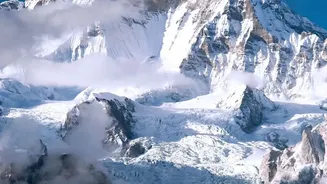
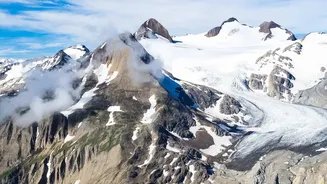
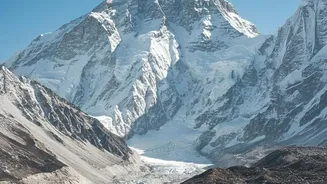
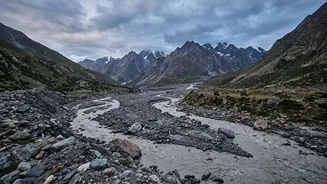
The Hindu Kush Himalaya region is warming at a rate nearly double the global average. This accelerated warming is causing glaciers to retreat at an alarming pace, with studies projecting that the region could lose up to two-thirds of its ice by the end
of the century. This isn't just about shrinking ice fields; it's a fundamental change to the cryosphere—the planet's frozen regions. This rapid melt disrupts everything from river flows that a billion people depend on to the very stability of the mountainsides themselves. The warming also affects precipitation, leading to more erratic rainfall and changing snowfall patterns, which further destabilizes the fragile high-altitude environment.
Unstable Slopes and Thawing Permafrost
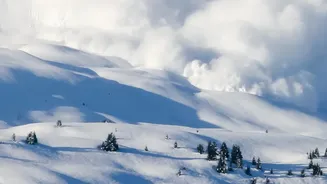
One of the most immediate dangers of a warmer Himalayas is the increase in avalanches and landslides. This is driven by two key factors: melting glaciers and thawing permafrost. Permafrost, the permanently frozen ground that acts like cement for rock and soil on steep slopes, is beginning to thaw. As this 'glue' weakens, entire mountainsides become less stable and more prone to collapse. When a large mass of rock and ice breaks free, it can create a devastating avalanche, as seen in the 2021 Chamoli disaster in Uttarakhand. These events are often a cascade; a rock-ice avalanche can crash into a river, temporarily damming it before causing a sudden, violent flood downstream.
The Swelling Threat of Glacial Lakes
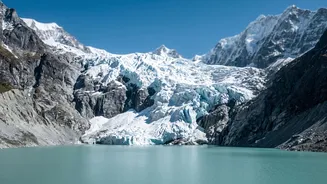
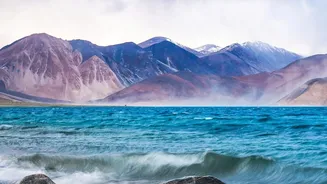
As glaciers melt, the water often pools behind natural dams made of rock and debris left by the receding ice. These formations are known as glacial lakes, and thousands have formed across the Himalayas. The problem is that these dams are often highly unstable. As the lakes swell with more meltwater, the pressure on these fragile dams increases. A large avalanche, a heavy rainfall event, or even an earthquake can trigger a breach, leading to a Glacial Lake Outburst Flood (GLOF). A GLOF is a catastrophic event where a massive volume of water, mud, and boulders is released in an instant, creating a torrent that destroys everything in its path, including villages, roads, and vital infrastructure like hydropower plants. Experts warn that the frequency and risk of GLOFs are expected to increase as the climate continues to warm.
A New Reality for Mountain Communities
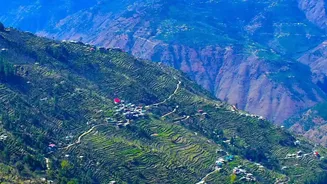
For the millions of people living in the Himalayan states, these changes are not abstract scientific concepts but a terrifying new reality. Communities in states like Himachal Pradesh, Uttarakhand, and Sikkim face a dual threat: the long-term risk to their water supply as glaciers eventually disappear and the immediate, increasing danger from flash floods and landslides. The destruction of infrastructure like roads, bridges, and hydropower projects has huge economic costs and can isolate remote villages for weeks. This heightened risk from climate-induced disasters makes it crucial to develop and implement better early warning systems and to rethink where and how development, from homes to major infrastructure projects, takes place in these increasingly volatile mountain landscapes.