










The Trillion-Dollar Ripple Effect
The June 2026 initial public offering of SpaceX was not just another day on the stock market; it was a seismic event. The company raised an estimated $75 billion, the largest IPO in history, and its valuation quickly soared towards an astronomical $2
trillion. While CEO Elon Musk’s net worth crossed into new territory, the IPO also created a sudden wave of wealth for thousands of employees, early investors, and venture capitalists who saw their paper holdings turn into liquid billions. This sudden influx of capital immediately began to ripple through the luxury market. In a pattern seen during previous tech booms, the first beneficiary has been the private aviation sector. Aviation lawyers reported being inundated with requests for private jet purchases from newly minted millionaires connected to the tech and AI sectors, with the SpaceX event being a primary driver. This surge in demand for high-end, conventional travel is just the first sign of a much larger trend.
From Private Jets to Rocket Ships
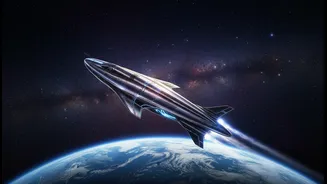
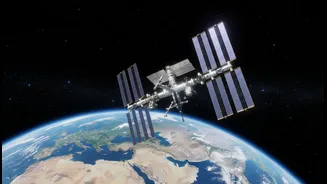
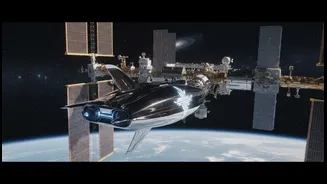
For a new class of ultra-high-net-worth individuals, a private jet is no longer the ultimate status symbol. The new frontier is, quite literally, the final frontier. The capital unlocked by the SpaceX IPO is providing both the funding for the industry and the customer base for its most exclusive product: space tourism. This market is rapidly moving from speculative to operational. While suborbital flights from companies like Virgin Galactic offer a taste of space for around $450,000, SpaceX provides the only orbital tourism experiences through partners like Axiom Space. These missions, which can involve multi-day stays on the International Space Station (ISS), come with a price tag starting at over $55 million per seat. This isn't a future promise; these flights are happening, carrying private citizens on missions that were once the sole domain of government astronauts.
A New Definition of Experiential Luxury
The appeal of space travel goes beyond a simple flight; it represents the pinnacle of what marketers call 'experiential luxury'. In a world where material possessions can be easily acquired, the super-rich are increasingly seeking unique, transformative experiences that offer more than just comfort and exclusivity. Space tourism delivers this in spades. It offers the profound psychological 'overview effect'—the cognitive shift reported by astronauts who see the Earth from space. It’s a journey that is physically and mentally demanding, often requiring training and preparation, which only adds to its cachet. This shift aligns perfectly with the mindset of tech entrepreneurs and investors who value groundbreaking achievements and pushing boundaries. For this demographic, a ticket to orbit is not just a vacation; it’s the ultimate expression of being at the forefront of human progress.
Building an Ecosystem Beyond Earth
The luxury travel wave is just the leading edge of a much broader commercialization of space. The immense funding now available is accelerating the development of a whole new industry. Companies like Axiom Space, Vast, and Sierra Space are in a race to build the first commercial space stations, envisioned as orbital hotels, research labs, and manufacturing hubs. These ventures depend on the reliable and increasingly cost-effective launch services pioneered by SpaceX. Furthermore, an entire support system is emerging, from companies specializing in astronaut training and spacecraft maintenance to those developing in-space manufacturing and logistics. The success of the SpaceX IPO provides a powerful proof of concept for investors, encouraging more capital to flow into this burgeoning space economy and ensuring the infrastructure for luxury travel—and beyond—is built out.
The View From India
While North America currently dominates the space tourism market, the Asia-Pacific region, including India, is projected to be its fastest-growing segment. This growth is fueled by rising disposable incomes among the wealthy and increasing government and private sector support for space-related activities. The Indian Space Research Organisation's (ISRO) own successes have ignited public interest in space exploration. This has paved the way for domestic startups like Mumbai-based Space Aura, which aims to offer high-altitude balloon flights to the edge of space. As the global market for space tourism expands, driven by the wealth created by events like the SpaceX IPO, opportunities for Indian entrepreneurs and adventurers are set to grow, positioning the nation as a key player in the next chapter of commercial spaceflight.