







The Persistent Threat to Harvests
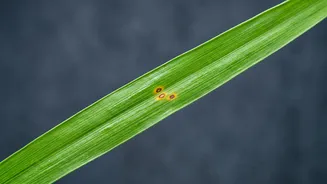
Plant diseases are a major threat to global food production, causing significant yield losses and economic hardship. For India's agricultural sector, which supports millions of livelihoods, the impact is particularly acute. Traditional methods of disease detection
often rely on manual inspections by experts, which can be slow, labour-intensive, and difficult to scale across vast farmlands. By the time symptoms are clearly visible to the human eye, it can often be too late to prevent significant damage. This reactive approach leads to lost income for farmers and can disrupt the entire food supply chain, highlighting the urgent need for faster, more accurate diagnostic tools.
What is Generative AI in This Context?
While many are familiar with generative AI for creating text or images, its application in agriculture is more specialised. Here, it’s not about creating art, but about creating data. Generative AI models, such as Generative Adversarial Networks (GANs), can be trained on thousands of images of healthy and diseased plants. They learn the underlying patterns so well that they can generate new, synthetic images of crops at various stages of infection. This ability to create realistic data is a game-changer for training other AI models, especially when real-world data is limited or hard to collect.
An AI Scout in Every Field
One of the most powerful uses of generative AI is in early disease detection. By integrating with drones, satellites, and even smartphone cameras, AI models can analyse images of crops with incredible speed and precision. An AI can spot the subtle, early signs of an infection—like minor changes in leaf colour or texture—that a human might miss. Some companies are already using AI to analyse drone imagery and send alerts to farmers about specific sections of their fields showing signs of fungal infections or nutrient deficiencies. This allows for timely, targeted interventions, reducing the need for broad-spectrum pesticides and minimising crop losses.
Beyond Detection to Prediction
Generative AI is not just about identifying existing problems; it's also about predicting future ones. By analysing vast datasets—including historical weather patterns, soil conditions, and past disease outbreaks—these models can forecast the risk of specific diseases emerging. This gives farmers a crucial head start, allowing them to take preventive measures. For example, an AI could advise a farmer to avoid planting a certain crop in a field with a high historical risk of a particular blight, suggesting a more resilient alternative instead. This predictive power transforms farm management from a reactive practice to a proactive, data-driven strategy.
The Challenges of Implementation
Despite its immense potential, the widespread adoption of generative AI in Indian agriculture faces several hurdles. The high initial cost of technology and the need for reliable internet connectivity in rural areas are significant barriers. Furthermore, there is a skills gap; using these advanced tools effectively requires training and support for farmers. Data privacy and ownership are also major concerns that need to be addressed through clear governance and policies. For these solutions to be truly effective, they must be affordable, accessible, and tailored to the needs of small and marginal farmers who form the backbone of Indian agriculture.