



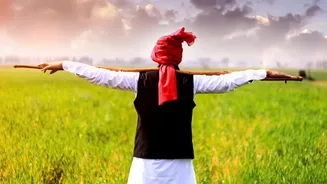
The Green Revolution's Heavy Price
Punjab, once the heart of India's Green Revolution, is facing a severe ecological crisis. The decades-long dominance of the paddy-wheat cropping system, while ensuring food security for the nation, has led to alarming consequences. The primary issue is water.
Paddy is an incredibly water-intensive crop, and its cultivation has resulted in the severe depletion of groundwater. Farmers report having to dig deeper wells every year, with costs for submersible pumps soaring into lakhs, making farming increasingly expensive. In many areas, the water table is dropping by about one meter annually. This over-extraction has not only strained water resources but has also led to soil degradation and other environmental problems, threatening the long-term viability of agriculture in the state.
What is Crop Diversification?
Crop diversification is the strategy of moving away from this two-crop monoculture towards a wider variety of crops. The goal is to reduce the area under paddy cultivation and replace it with alternatives that are better suited to Punjab's ecology. The main crops being promoted are maize, cotton, pulses, and oilseeds. These crops generally require significantly less water than paddy, helping to conserve the state's precious groundwater. For instance, maize can use up to 70% less water than rice. Beyond saving water, diversification can also improve soil health, especially when legumes like pulses are introduced, as they naturally fix nitrogen in the soil. The plan, which has been in discussion for years, is now seen as a critical survival strategy for the state's agricultural future.
The Promise of Income Security
The biggest question for any farmer considering a switch is simple: will it be profitable? For years, the guaranteed procurement of wheat and paddy at a Minimum Support Price (MSP) has provided a crucial safety net. Any diversification plan must offer similar, if not better, economic security. To address this, the government's strategy hinges on a few key pillars. Firstly, providing an MSP for alternative crops to make them competitive with paddy. Secondly, offering direct financial incentives to farmers who make the switch. For example, under current schemes, farmers can receive incentives per hectare for shifting to crops like maize. Finally, there's a focus on creating the necessary infrastructure, such as storage facilities and market linkages, to ensure farmers can easily sell their new produce. Without this robust support system, farmers are reluctant to take on the risk of diversification.
Viable Alternatives on the Table
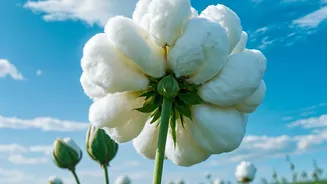
The government is actively promoting several alternative crops. Maize is a top contender, viewed as a strategic resource for everything from poultry feed to ethanol production. The Kharif (monsoon) variety is particularly encouraged as it is less water-intensive. Cotton cultivation is also on the rise, with a significant increase in acreage reported in recent seasons. Pulses and oilseeds are also part of the diversification push. A key benefit of promoting these crops is that India currently imports large quantities of pulses and oilseeds, so increased domestic production can also help the national economy. The government has been increasing the MSP for these crops to make them more attractive to growers.
Hurdles on the Ground
Despite the clear need and government push, the shift is not easy. A major challenge is the economic calculation. Even with incentives, the profitability of paddy, backed by a well-established procurement system, is often higher and more reliable than that of alternative crops. Farmers also face a lack of adequate marketing infrastructure and storage facilities for crops other than wheat and rice. There are also practical challenges, such as the need for different types of farm machinery and the lack of expertise in cultivating new crops after generations of focusing on the paddy-wheat cycle. Furthermore, policies like subsidized electricity for pumping groundwater indirectly continue to incentivize water-guzzling crops, working against the goals of diversification. Until the incentives for alternative crops decisively outweigh the structural advantages of paddy, large-scale change will remain a challenge.