





The Ghost of a Star
A white dwarf is what's left after a star like our own Sun runs out of fuel. It’s the incredibly dense, Earth-sized core that remains after the star has shed its outer layers. These stellar ghosts no longer generate heat through nuclear fusion, so they
spend billions of years slowly cooling down and fading away. For a long time, astronomers believed their colour was a straightforward indicator of this cooling process—shifting from blue-white when hot to orange and red as they age, just like a hot piece of metal cooling down. This simple rule helped astronomers estimate their age and temperature.
A Surprising Splash of Colour
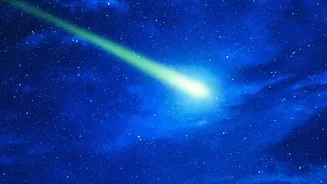
Recent research from the University of Warwick has turned this simple rule on its head. By modelling how our eyes would perceive these distant objects up close, astronomers found that white dwarfs can come in a surprising palette of colours, including pink, purple, and even chartreuse green. This discovery was a shock because green stars were thought to be impossible. A star's light is a blend of all colours in the spectrum, and even those that emit peak green light also emit so much red and blue that they appear white to our eyes. The new findings show that the unique physics of white dwarfs makes them an exception.
The Sodium 'Pollution' Effect
The secret to these unusual colours lies in the star's incredibly dense atmosphere and what's floating in it. The headline-making discovery centres on sodium. In some white dwarfs, a 'scar' of sodium on the surface, likely from consuming rocky planetary debris, acts like a cosmic filter. The extreme pressure in a white dwarf's atmosphere—millions of times denser than the Sun's—causes the sodium atoms to absorb a much broader band of light than they normally would. Instead of just absorbing a narrow sliver of orange light, the sodium absorbs yellows, oranges, and even some reds. When you filter out those colours, what's left is a ghostly green glow.
A Green Star and Its Siblings
The first star confirmed to have this green appearance is named WD J1330+6435. Its atmosphere is 'polluted' with sodium, calcium, and lithium from a planetary system it once hosted. The sodium is the main culprit for its greenish hue, but other elements can create different effects. For example, astronomers also identified a white dwarf named WD J1011+2845 that glows a deep salmon-pink. In this case, carbon dredged up from the star's core absorbs light in such a way that mostly reddish light escapes. These findings demonstrate that a white dwarf's colour is not just about temperature, but also about its chemical history.
Why This Changes Everything
This discovery is more than just a colourful curiosity. For decades, astronomers have relied on the colour of white dwarfs as a primary tool to measure their temperature and, by extension, their age. If a white dwarf appears redder, it has been assumed to be older and cooler. But this new research shows that chemical composition can mimic the effects of cooling, making a star appear older than it truly is. This means that previous age estimates for some white dwarfs might be incorrect. The finding provides astronomers with a new layer of complexity to consider, but it also offers a new method to study the final, dramatic chapters of planetary systems that have been consumed by their dying stars.