






What is the Recovery System?
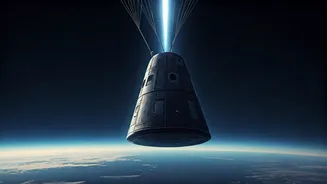
The journey into space is only half the mission. The return is equally, if not more, critical. For Gaganyaan, this means a controlled splashdown into the Indian Ocean. The crew module, carrying the astronauts, must be slowed from hypersonic speeds and
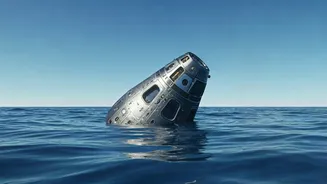
brought to a gentle landing in the sea. This is achieved through a complex, multi-stage parachute system. Once the module re-enters the atmosphere, a sequence of ten parachutes is designed to deploy, progressively braking its descent. After it hits the water, flotation bags will inflate to keep the capsule upright and stable. To ensure it can be found quickly in the vastness of the ocean, the module is equipped with GPS transmitters, location beacons, and will even release a bright sea marker dye for aerial spotting.
A New Rocket for a Critical Test
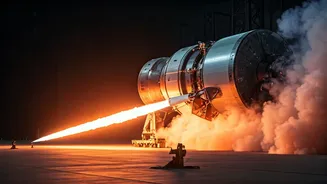
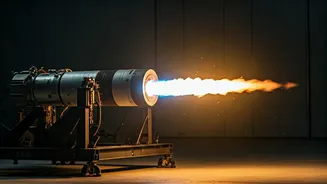
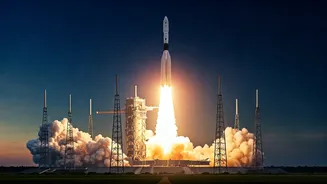
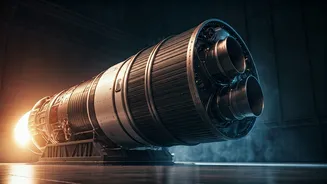
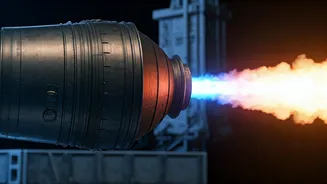
To validate this crucial parachute system, the Indian Space Research Organisation (ISRO) has developed a new, dedicated test rocket: the Sub-Orbital Launch Vehicle for Experiments (SOLVE). This vehicle is specifically designed to carry a mock crew module to an altitude of 10 to 17 kilometres and then release it, simulating the conditions the module will face during a mission abort or return. On July 3, 2026, ISRO successfully conducted the first ground test of the solid motor that will power the SOLVE rocket at the Satish Dhawan Space Centre in Sriharikota. This successful test is a major milestone, as the SOLVE platform gives engineers the flexibility to conduct repeated tests under various conditions, ensuring the parachute system is robust and reliable before it is used in a crewed flight.
The Navy's Vital Role
Once the crew module splashes down, the mission enters its final, crucial phase: recovery. The Indian Navy is the lead agency for this complex operation. For months, joint teams from ISRO and the Navy have been conducting extensive trials to fine-tune the Standard Operating Procedures (SOPs) for safely recovering both the crew and the capsule. Using a mass and shape-simulated mockup of the crew module, teams have practiced everything from attaching recovery buoys and towing the capsule to hoisting it onto a ship's deck. These trials have been conducted in controlled environments like the Navy’s Water Survival Training Facility in Kochi and in open sea conditions off the coast of Visakhapatnam, ensuring readiness for any scenario.
Why Every Test Matters
The Gaganyaan project aims to send a three-member crew to an orbit of 400 kilometres for a three-day mission and bring them back safely to Earth. Achieving this will make India only the fourth nation to independently conduct human spaceflight. The mantra for this entire endeavour is safety first. Every component, from the launch vehicle to the life support systems and the recovery procedures, must be tested to perfection. The recovery trials are paramount because the moments following splashdown are fraught with risk. Astronauts must be extracted from the module quickly and safely, a procedure that requires seamless coordination between multiple teams. These tests are not just about validating hardware; they are about building confidence in the procedures and training the teams who will be responsible for the lives of India's first 'Gaganyatris'.