





The Allure of a Natural Tint
In a world of harsh chemical dyes, beetroot offers a refreshing alternative. Rich in natural pigments called betalains, it provides a gentle way to achieve a reddish tint without ammonia or peroxides. This makes it a popular choice for those with sensitive
scalps or anyone looking to avoid damaging their hair structure. Beyond colour, beetroot is packed with vitamins and minerals like iron, folate, and Vitamin C. When applied to the scalp, these nutrients can help improve blood circulation, nourish hair follicles, and potentially reduce issues like dandruff, creating a healthier environment for hair to grow. It is less of a dye and more of a nourishing treatment with a colourful bonus.
Managing Expectations: Colour and Longevity
The most important thing to know is that beetroot provides a temporary stain, not a permanent dye. Unlike chemical colours that open the hair cuticle to deposit pigment, beetroot juice simply coats the outside of the hair shaft. This is why the colour is so fleeting. You can expect the tint to last anywhere from a single wash to perhaps a week, depending on your hair's porosity and how often you shampoo. To make it last a little longer, it's best to rinse with cool water and avoid shampooing for at least 24 hours after application. Heat styling can also cause the colour to fade more quickly.
A Spectrum of Shades: Results on Different Hair Colours
The final colour you get is highly dependent on your starting hair shade. For those with light blonde or brown hair, beetroot can produce a noticeable and pretty pinkish-red hue. On grey hair, it may result in a vibrant pink or wine-red stain, though the coverage can be unpredictable and may not be uniform. For the majority of people in India with dark brown or black hair, the effect will be much more subtle. Rather than a distinct colour change, you can expect a faint reddish or burgundy sheen that is most visible in bright sunlight. It adds dimension and a warm glow rather than a dramatic transformation.
Your Step-by-Step Guide to Beetroot Tint
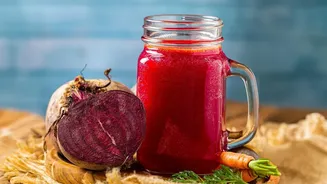
Ready to give it a try? The process is simple and can be done at home. You will need one or two fresh beetroots, a carrier oil like coconut or olive oil, gloves, and a shower cap. Start by peeling and juicing the beetroots. Mix the fresh juice with a few tablespoons of your chosen carrier oil; this adds moisture and makes the application smoother. Before applying, protect your hairline and ears with petroleum jelly to prevent skin staining. Wearing gloves, work the mixture through clean, dry hair, ensuring every strand is coated from root to tip. Pile your hair on top of your head, cover it with a shower cap, and let it sit for at least one to two hours. For a deeper tint, you can leave it on for even longer. Finally, rinse your hair thoroughly with cool water.
The Pros and Cons at a Glance
Beetroot hair colour has clear advantages and disadvantages. On the plus side, it is completely natural, free from damaging chemicals, and safe for almost everyone to use. It doubles as a conditioning treatment that can improve scalp health and add a beautiful gloss to your hair. It is also inexpensive and easy to prepare in your own kitchen. The downsides, however, are significant. The colour is extremely temporary and fades very quickly. The application process can be messy, and the results are subtle and highly variable, especially on dark hair. It is not an effective solution for covering grey hair completely, often requiring a mix with henna for a more lasting stain.