
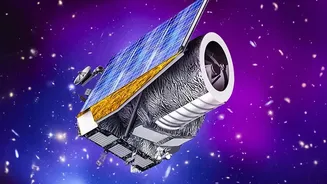
What is PRIMA?
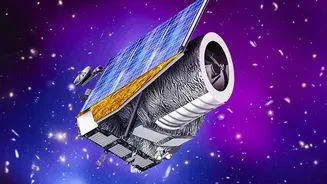
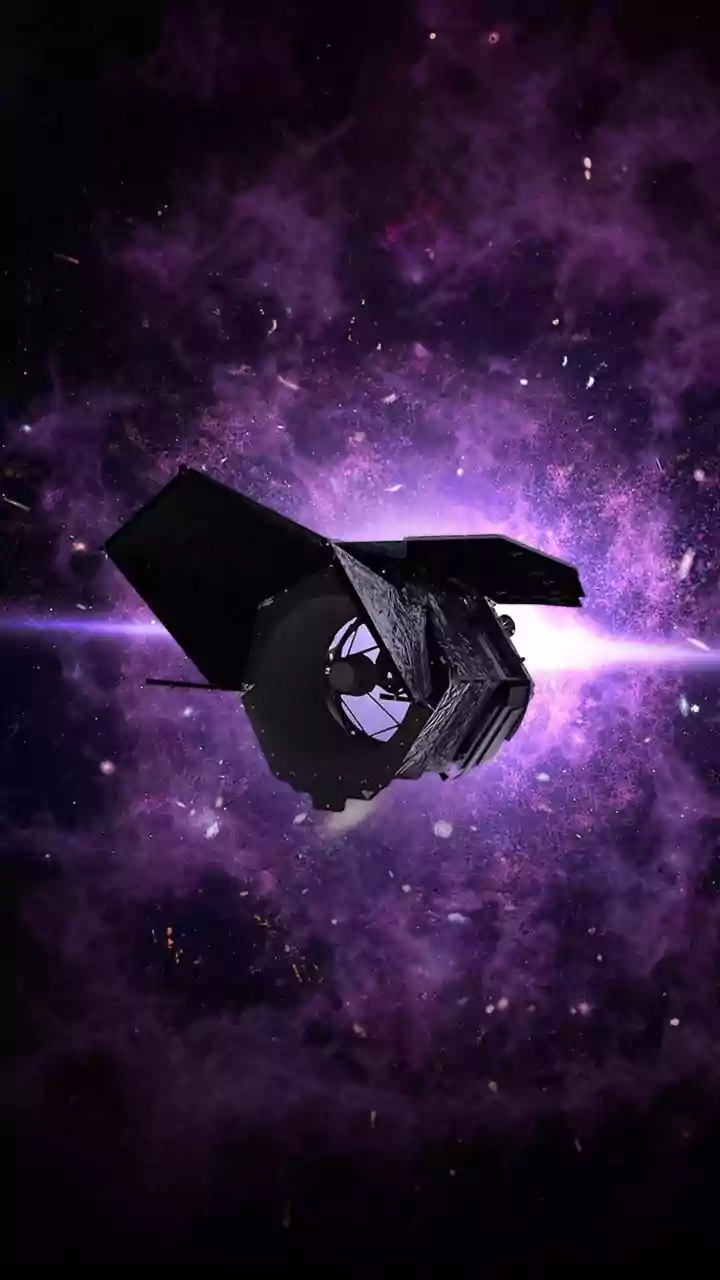
PRIMA stands for the Probe far-Infrared Mission for Astrophysics. It is a new space observatory that will explore the universe in far-infrared light, a spectrum that is invisible to the human eye and even to other powerful telescopes like the James Webb
Space Telescope (JWST). This mission is the first of a new category NASA is calling "Probe Explorers," which are designed to be more ambitious than smaller missions but less costly than massive flagship observatories like JWST. With a proposed budget of around $1.2 billion, PRIMA represents a strategic middle ground, allowing for high-impact science without the decade-spanning, multi-billion-dollar price tag of its larger cousins. The project is led by NASA's Jet Propulsion Laboratory (JPL) in collaboration with several international space agencies.
The Science of the 'Cool Universe'
PRIMA's main goal is to study the "cool universe," observing cosmic objects and processes that are too cold or distant to be seen in visible light. Its key science objectives include understanding how planets and stars form, how galaxies and their central supermassive black holes grow together, and how cosmic dust and heavy elements have accumulated over time. By looking at far-infrared light, PRIMA can peer through cosmic dust clouds that obscure the view of other telescopes. This will allow scientists to trace the journey of water to nascent planets and analyze the building blocks of planetary atmospheres, providing crucial clues about the origins of life. As one associate administrator for NASA's Science Mission Directorate noted, PRIMA is humanity's next window into the deep universe and will help explain how water on Earth came to be.
What 'Phase B' Actually Means
In the world of NASA project management, moving into Phase B is a significant milestone. The life cycle of a NASA mission is broken into distinct phases, from Pre-Phase A (concept studies) to Phase F (closeout). Phase B marks the transition from a general concept to a concrete engineering plan. During this stage, the mission's preliminary design is finalized, technology is completed, and engineering prototypes are built and tested. It is the point where the project team must demonstrate that its technical plans, cost estimates, and schedule are solid. Think of it as moving from an architectural sketch to a detailed blueprint. While not the final green light for construction (that comes with Phase C), successfully completing Phase B is a critical step that shows the mission is feasible and ready for serious development.
How It Will Work
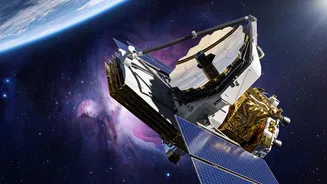
PRIMA will feature a 1.8-meter (5.9-foot) telescope that is cryogenically cooled to just 4.5 Kelvin, only a few degrees above absolute zero. This extreme cold is necessary to prevent the telescope's own heat from interfering with its sensitive detectors, which are designed to pick up faint far-infrared signals. The observatory will carry two main instruments: a high-resolution spectrometer called FIRESS and an imaging polarimeter called PRIMAger. Together, these instruments will create detailed maps and chemical profiles of planet-forming disks and distant galaxies. This technology represents a massive leap in sensitivity, allowing PRIMA to conduct spectral surveys orders of magnitude faster than previous far-infrared missions like the Herschel Space Observatory.
What Happens Next?
With the official start of Phase B, the PRIMA team will spend the next couple of years finalizing the design, maturing key technologies like its cryogenic coolers, and establishing contracts with hardware suppliers. This phase will culminate in a series of critical reviews where NASA leadership will assess the project's technical progress and cost performance. If it passes these reviews, the mission will be confirmed for Phase C, which involves the final design and fabrication of the spacecraft. While there are still many hurdles to clear, the current target for launch is no earlier than 2033, after which PRIMA is expected to conduct a five-year mission exploring the cosmos.