






The Specialist vs. The Generalist
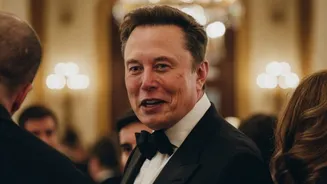
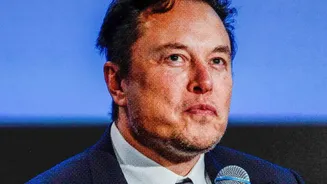
For decades, the path to a successful career was clear: specialize. Become an expert in one field and climb the ladder. However, Elon Musk, the mind behind Tesla and SpaceX, argues for the opposite approach, especially for those just starting out. He
advises young people to pursue a wide-ranging education that covers arts, sciences, and engineering. The logic flips the old saying, “a jack of all trades is a master of none.” In an era where AI can master narrow tasks with superhuman efficiency, the new advantage lies not in being the best at performing one skill, but in understanding how multiple skills and disciplines connect. This makes you an “expert generalist”—someone who can draw on diverse knowledge to solve complex problems in novel ways.
Why Broad Knowledge Is Future-Proof
Musk’s own career is a testament to this philosophy. He has built revolutionary companies in vastly different industries: transportation, aerospace, software, and energy. This was possible because he transfers knowledge across fields. He famously deconstructs subjects to their fundamental principles—a method he credits to his physics background—to understand how things really work, then builds up from there. This approach allows for innovation that specialists, siloed in their respective fields, might miss. For example, combining an understanding of software with manufacturing principles allowed Tesla to revolutionize the auto industry. The key takeaway is that a broad knowledge base provides an information advantage, enabling you to see connections and opportunities that others do not.
Your New Job Title: Robot Director
So, what does this mean for the future of work? Musk predicts a world where AI and robots handle the majority of specialized and repetitive labor. In this world, the most crucial human skill won't be executing a task, but deciding what task is worth doing. He suggests that the valuable employees of the future will be those who can effectively direct these powerful AI systems. To do this well, you need broad context. Someone who only understands code might build a technically perfect AI model, but someone who also understands psychology, history, and economics will know what questions to ask that model to solve a real human problem. This is why Musk emphasizes developing a wide general knowledge; it equips you to formulate better questions and prompts for the AIs and robots that will become our partners in the workplace.
How to Build Your Generalist Toolkit
Applying Musk's advice doesn't mean abandoning your major or chosen career path. Instead, it’s about supplementing it. First, read voraciously and across many different subjects. Musk himself was a prodigious reader from a young age, consuming everything from encyclopedias to sci-fi novels. Second, actively talk to people from different industries and walks of life to understand their perspectives. Third, focus on learning the fundamental principles of any new subject—what Musk calls the 'trunk and big branches' of the knowledge tree—before getting lost in the details, or 'leaves'. This creates a solid mental framework to hang new information on. The goal isn't to become a surface-level expert in ten different things, but to build a strong, interconnected foundation of knowledge that allows you to adapt, learn quickly, and see the bigger picture.