




From Test Flight to Workhorse
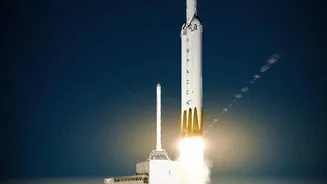
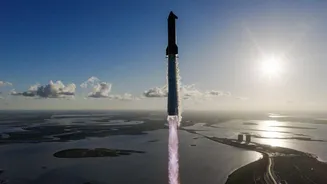
On September 28, Starship's 14th test flight lifted off from Starbase, Texas, and accomplished what no previous flight had: it reached Earth's orbit. This was a crucial milestone, transitioning the program from a series of ambitious, and sometimes explosive,
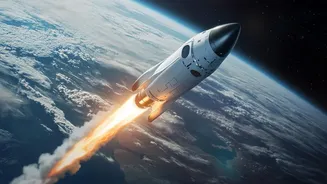
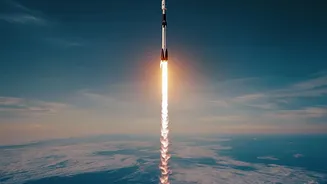
tests into a functional launch system. While the ascent wasn't flawless—one of the upper stage's Raptor engines shut down prematurely—mission control made the call to push for orbit, a decision that paid off. After reaching an altitude of over 170 miles, the vehicle demonstrated its primary purpose by successfully opening its payload bay and beginning its operational career. This mission marked a pivotal moment, proving Starship is ready to begin the work it was designed for, moving beyond test objectives to delivering real, revenue-generating cargo to space.
A 'Pez Dispenser' for the Internet
The key payload for this historic flight was a batch of 26 next-generation Starlink satellites. These aren't just any satellites; they are the new, larger 'V3' models, which are too big and heavy to be launched by SpaceX's reliable Falcon 9 rocket. Each V3 satellite is designed to offer roughly 10 times the connectivity capacity of the previous generation, a massive leap for the satellite internet constellation. The deployment itself was a spectacle, with the satellites being released one-by-one from a slot in the spacecraft, a mechanism often compared to a Pez dispenser. By using Starship, SpaceX can deploy its most powerful satellites, dramatically increasing the capacity and speed of the Starlink network. One Starship launch is estimated to add as much network capacity as 20 Falcon 9 launches, a game-changing shift in efficiency.
The Planned Pacific Splashdown
After deploying the satellites, the mission plan called for a controlled return to Earth. While the ultimate goal for Starship is full reusability, with both the booster and the ship landing back at the launch tower to be caught by giant mechanical arms, SpaceX is taking an iterative approach. For this flight, the plan was always a soft splashdown in the ocean. Originally scheduled for a nearly 10-hour flight with six orbits, the mission was shortened to just three hours as a precaution following the engine issue during ascent. The flight teams guided the spacecraft to a deorbit burn, targeting a pre-cleared zone in the Pacific Ocean north of Hawaii. The vehicle survived the fiery reentry, controlled its descent, and performed a final landing burn just before touching down in the water, successfully completing another major test objective even as it ended in a spectacular explosion upon tipping over.
Why This Mission Changes Everything
This single flight represents the convergence of SpaceX's two most ambitious projects: Starship and Starlink. Starship needs a primary customer to justify its development, and Starlink needs Starship's immense payload capacity to launch its next-generation constellation. With this successful payload deployment, that symbiotic relationship is now proven. The ability to launch large batches of V3 satellites will allow SpaceX to rapidly expand Starlink's capacity, addressing congestion in busy areas and expanding its service globally. Beyond Starlink, a working Starship completely changes the economics of space access. It is the vehicle NASA is counting on for its Artemis program to return humans to the Moon. It also unlocks the potential for even grander ambitions, including Mars colonization, the deployment of massive space telescopes, and even high-speed point-to-point travel on Earth.