






The Pre-Dawn Spectacle
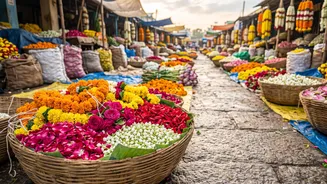
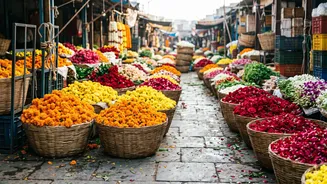
To step into a major Indian flower market, or 'phool mandi', between 3 AM and 7 AM is to witness a city’s floral heart beating at its most frantic pace. The air, thick with the mixed perfumes of jasmine, rose, and marigold, is punctuated by the shouts
of traders and the rustle of countless blooms being sorted and bundled. This is where the true scale of the flower trade becomes apparent. Porters rush past with towering baskets of flowers balanced on their heads, trucks unload mountains of fragrant cargo, and hundreds of vendors line narrow, often slippery lanes, ready for a few intense hours of business that will supply an entire metropolis. It is a world of organised chaos, a sensory overload that is both overwhelming and utterly captivating.
A Riot of Colour and Commerce
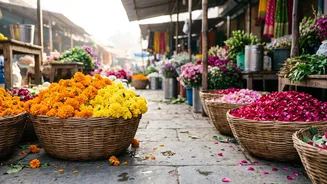
The core of the experience is the striking contrast between the delicate beauty of the product and the raw, unsentimental nature of the commerce. Heaps of vibrant marigolds, essential for temple offerings and festivals, are weighed by the kilogram. Delicate roses and auspicious lotus flowers are bundled tightly with string, treated not as individual blossoms but as perishable goods in a fast-moving supply chain. Haggling is swift and relentless, a language understood by all. This is where event planners, temple suppliers, neighbourhood florists, and wedding decorators converge to secure the freshest and most affordable flowers, ensuring that every corner of the city, from sacred altars to grand hotel lobbies, is adorned with colour.
Kolkata’s Historic Mullik Ghat
Perhaps no market embodies this spirit more iconically than Kolkata’s Mullik Ghat. At over 130 years old, it is one of Asia’s largest and most historic flower markets, sprawling under the magnificent Howrah Bridge on the banks of the Hooghly River. Here, the setting is as dramatic as the trade itself. Sellers set up their wares on the ghat’s steps, creating a cascading waterfall of orange and yellow marigolds against the rustic backdrop of the bridge and the river. Photographers from around the world are drawn to capture the scene, where the ancient rhythms of commerce, culture, and daily life play out every morning.
Delhi’s Modern Ghazipur Hub
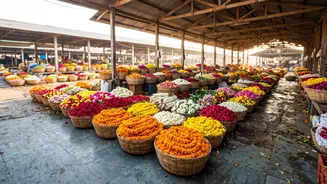
In contrast to the historical charm of Mullik Ghat, the Ghazipur flower market in Delhi represents the modern, sprawling scale of the industry. Relocated to its current site in 2011, it is a massive, purpose-built hub that serves as a clearinghouse for flowers arriving from across the country and even internationally, from Holland to Thailand. Operating from as early as 3 AM, its vast sheds are filled with an incredible diversity of blooms, from traditional Indian flowers like marigolds and jasmine to exotic lilies, orchids, and gerberas. Ghazipur is less about picturesque views and more about sheer volume, a testament to the immense and ever-growing demand for flowers in modern India.
From Market to Mandir
The journey for these flowers doesn't end with the morning’s frenetic trade. A string of jasmine bought in the pre-dawn chaos of Mumbai's Dadar market will later adorn someone's hair. A bundle of roses from Bengaluru’s K.R. Market will become part of an elaborate wedding garland. A kilogram of marigolds from Kolkata will be offered at a local temple, their bright colour a symbol of devotion. These markets are the unseen starting point for countless daily rituals, celebrations, and moments of quiet reflection across the nation. They are a vibrant, fragrant reminder that even in the most functional of trades, there is immense beauty to be found.