





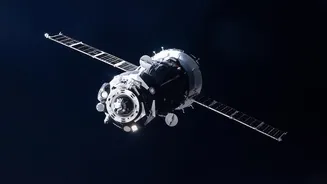
A Blueprint for India's Space Station
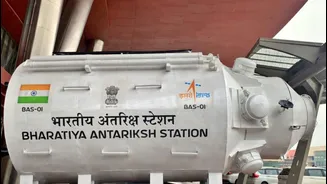
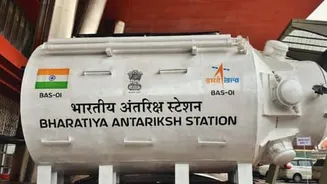
In a significant move, ISRO has released a comprehensive set of 31 baseline design documents for the BAS-01 module. This module is the very first component of the planned Bharatiya Antariksh Station (BAS), India's ambitious project to build its own orbiting
outpost in space. The release of these documents follows the successful completion of a Baseline Design Review, a critical engineering milestone that essentially finalises the blueprint for the module. With this review complete, ISRO has now commenced the design of the various subsystems that will make up the module. This announcement, confirmed by Union Minister Dr. Jitendra Singh, signals that the project is moving from the drawing board to the development phase.
What is the BAS-01 Module?
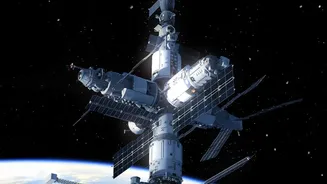
The BAS-01 is the foundational building block of the Bharatiya Antariksh Station. Think of it as the first piece of a complex orbital puzzle. The complete space station is envisioned as a five-module structure that will be assembled in orbit over several years, with a target completion date of 2035. The BAS-01 module itself is scheduled for launch by 2028. This first module will serve as a test bed for crucial technologies, including life support systems, crew quarters, and docking mechanisms. Weighing approximately 10 tonnes, it is designed to support human missions in low-Earth orbit, allowing astronauts to conduct long-duration experiments in a microgravity environment, independent of international partners. This self-reliance is a core objective of India's human spaceflight program, Gaganyaan.
Inside the 31 Documents
While the exact contents are for approved entities, the 31 baseline documents represent a treasure trove of technical knowledge. They outline the finalised system engineering and design configuration of the BAS-01. This includes everything from the module's structure, power distribution, and thermal control to its life support systems and communication interfaces. Releasing these documents is a strategic decision. It allows a wider ecosystem of Indian private industries, public sector undertakings, and research institutions to understand the requirements and potentially participate in the construction and supply of various components. This move is intended to kickstart the industrial capacity needed to build not just this first module, but the entire space station.
Empowering Private Industry
This release is a clear signal of ISRO's broader strategy to transition from being the sole actor in India's space efforts to becoming an enabler of a larger commercial ecosystem. The process is being facilitated by IN-SPACe (Indian National Space Promotion and Authorization Centre), the agency created to act as a bridge between ISRO and the private sector. By providing detailed design documents, ISRO is lowering the barrier to entry for private companies. Instead of investing heavily in foundational research and development, companies can now focus on manufacturing, integration, and innovation for specific subsystems. This is part of a larger push to foster self-reliance, reduce imports for critical space technologies, and build a robust domestic supply chain for India's ambitious space goals, including the Gaganyaan program and the future space station.
The Economic Ripple Effect
The long-term impact of this decision extends far beyond ISRO's gates. By inviting private participation in a project as prestigious and complex as the Bharatiya Antariksh Station, the government is catalysing high-tech manufacturing and creating new economic opportunities. The indigenous development of critical technologies like flight suits, docking systems, and life support—spurred by projects like this—will have a ripple effect across the aerospace, electronics, and materials science industries. This move is designed to not only accelerate the timeline for the space station but also to position Indian industry to compete on the global stage, creating jobs, fostering innovation, and ultimately increasing India's share of the global space economy.