
The Ocean's Iron-Clad Idea
The theory behind ocean iron fertilisation is both elegant and powerful. In vast stretches of the ocean, particularly the Southern Ocean, life is abundant but growth is stunted. The missing ingredient isn't sunlight or major nutrients like nitrogen, but a tiny
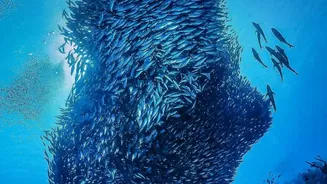
micronutrient: iron. Scientists discovered that adding small amounts of iron to these 'anemic' waters can trigger enormous blooms of phytoplankton, the microscopic plants at the base of the marine food web. Through photosynthesis, these blooms draw down massive amounts of carbon dioxide from the atmosphere. The hope is that when these phytoplankton die, they sink to the deep ocean, taking the carbon with them and locking it away for centuries. It's a process that happens naturally when volcanic ash or iron-rich dust from deserts blows over the sea.
A Reality Check from New Research
For decades, small-scale experiments have confirmed that adding iron does indeed cause phytoplankton to bloom. However, recent and more comprehensive analyses are providing a crucial reality check, highlighting the stark difference between creating a bloom and effectively sequestering carbon. The core problem is efficiency. A significant portion of the newly grown carbon doesn't sink. Instead, it gets eaten by tiny animals called zooplankton or is decomposed by bacteria in the surface layers, releasing the carbon right back into the atmosphere. Studies suggest that, on average, a very small amount of the carbon produced in a bloom actually reaches the deep-sea floor for long-term storage. Furthermore, much of the carbon that does sink below the surface may not stay there, with models suggesting a majority can be re-exposed to the atmosphere in less than 40 years.
Unintended Ecological Consequences
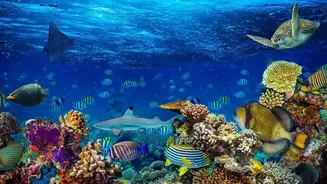
Beyond the question of effectiveness, scientists are learning more about the potential for unintended and harmful side effects. Artificially triggering massive blooms can fundamentally alter the local food web, often favouring certain types of larger phytoplankton like diatoms over others. This can have cascading, unpredictable effects on the entire ecosystem, from the smallest bacteria to the largest fish. Another major concern is the creation of other greenhouse gases. Some studies predict that the decomposition of these massive blooms could increase the production of nitrous oxide and methane, potent greenhouse gases that could partially or even entirely offset the climate benefits of the carbon that was removed. Furthermore, this process can lead to deoxygenation, creating 'dead zones' in subsurface waters as bacteria consume all the available oxygen while breaking down the sunken plankton.
The Robbing Peter to Pay Paul Effect
A more subtle, yet critical, limitation is now coming into focus: nutrient robbing. The ocean is an interconnected system. One MIT study highlighted that stimulating a bloom in one area, like the Southern Ocean, could use up all the available macronutrients (like nitrates and phosphates) in that water mass. As ocean currents transport this now nutrient-depleted water to other regions, such as the North Atlantic, it could starve those ecosystems of the nutrients they need to thrive. An unintentional 'experiment' of this nature is already being observed in the North Pacific, where iron from industrial pollution is causing spring blooms to be so intense that they exhaust other nutrients, leading to a crash in marine life later in the season. The net result of large-scale fertilisation could be a simple redistribution of biological activity, rather than a net increase in global carbon uptake.
What The Science Says Now
Given these mounting complexities, the scientific consensus is shifting. While the idea of a quick geoengineering fix is appealing, the research increasingly shows that ocean iron fertilisation is not a magic bullet. Its effectiveness is highly uncertain, the monitoring required is incredibly difficult, and the risks of disrupting marine ecosystems are significant. This doesn't mean the research should stop. In fact, scientists are now calling for a new generation of larger, more carefully controlled studies using modern autonomous technology to better understand the long-term impacts. The goal is no longer about rushing to deployment, but about building a robust scientific understanding of the ocean's intricate systems. This knowledge is essential to distinguish between a viable climate solution and a potentially dangerous distraction.