





In the world of cooking, texture is a secret weapon. It can turn a simple dish into something memorable. Enter the French almond tuile: a cookie so thin, crisp, and elegant that its true calling lies far beyond the coffee saucer.
What Exactly is a Tuile?
A tuile (pronounced 'tweel')
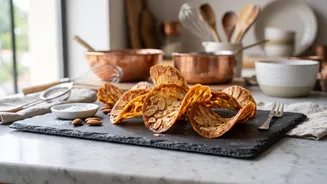
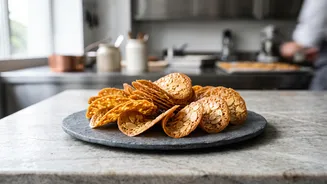
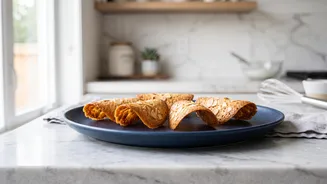
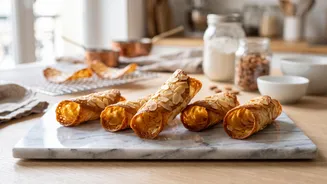
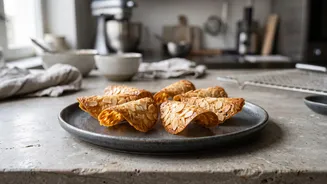
is a classic French wafer cookie famous for its delicate, crisp texture and curved shape. The name itself means 'tile' in French, a nod to the way these thin cookies are traditionally draped over a rolling pin while still warm, mimicking the curved roof tiles of provincial France. The basic batter is deceptively simple, typically containing just egg whites, sugar, flour, and melted butter, with sliced almonds being the star of the most classic version. This simple combination, however, produces something remarkably refined: a cookie that is feather-light, snaps with a satisfying crispness, and delivers a toasted, nutty flavour.
The Magic of That Signature Snap
What makes a tuile so unique is its texture. Unlike chewy or soft cookies, a tuile’s defining characteristic is its whisper-thin, brittle quality. This is achieved through a specific combination of ingredients and technique. The use of egg whites, rather than whole eggs, contributes to a light, crisp structure without the heaviness of yolks. A high ratio of sugar and butter ensures the batter spreads thinly during baking and contributes to its crispness upon cooling. The key to success is spreading the batter as thinly as possible—almost transparently—and baking it just until the edges turn golden. For a fleeting moment after leaving the oven, the cookie is pliable and can be shaped before it cools and hardens into its final, fragile form.
Beyond the Coffee Saucer: Sweet Applications
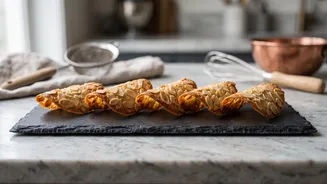
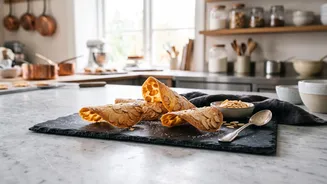
While delicious on their own, tuiles are a pastry chef's go-to for adding textural contrast and elegance to desserts. Their delicate crunch is the perfect foil for soft, creamy textures. Imagine a rich chocolate mousse or a velvety panna cotta, where a shard of almond tuile provides a much-needed snap with each spoonful. They can be shaped into bowls to hold scoops of ice cream or sorbet, or rolled into delicate 'cigars' to be filled with ganache or cream. Tucking a tuile into a dessert is an instant upgrade, adding a professional touch that signals thoughtfulness and a command of texture.
A Surprising and Savory Twist
The versatility of the tuile doesn't end with dessert. By rethinking the flavour profile, this delicate wafer can find a home in the savory world. The fundamental technique remains the same, but the sugar is reduced or removed, and savory ingredients are introduced. Imagine a tuile made with grated Parmesan cheese, which bakes into a lacy, salty crisp perfect for garnishing a Caesar salad or a bowl of tomato soup. Other variations include adding sesame seeds, poppy seeds, or finely chopped herbs like rosemary or thyme to the batter. These savory tuiles can serve as an elegant, crunchy base for appetizers, a garnish that adds height and texture to a main course, or a sophisticated alternative to crackers on a cheese board.