





The Landmark Discovery
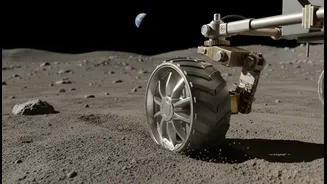
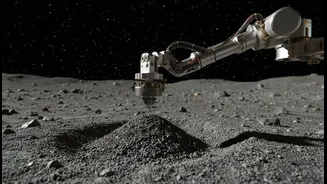
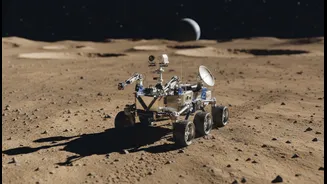
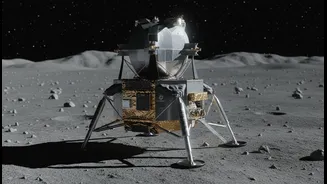
In a study that has thrilled the global scientific community, data from the Pragyan rover's Alpha Particle X-ray Spectrometer (APXS) has revealed a stunning connection. Scientists from Ahmedabad's Physical Research Laboratory have confirmed that the soil
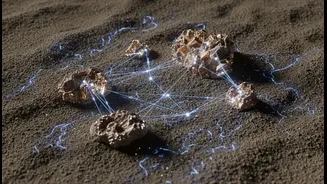
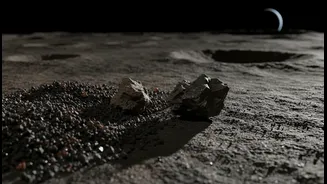
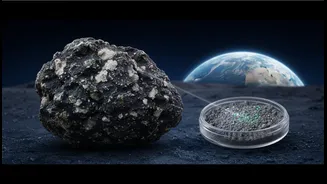
at Shiv Shakti Statio, Chandrayaan-3’s landing site, has a chemical composition that closely mirrors ALHA 81005, the very first meteorite found on Earth to be confirmed as originating from the Moon. The analysis shows the lunar soil contains about 26.1% aluminium oxide and 14.4% combined iron and magnesium oxide. This is remarkably close to the meteorite's composition, which has 25.8% aluminium oxide and 13.7% iron and magnesium oxides, linking an on-site sample to one studied in labs for decades.
A Tale of Two Samples
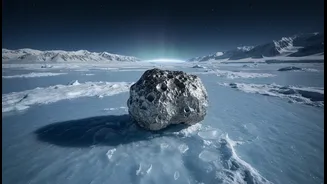
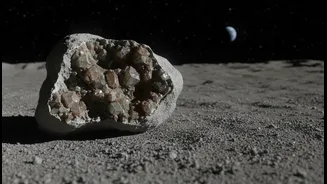
Before we could land on the Moon, our only physical pieces of it were meteorites that had been blasted off its surface by ancient impacts and travelled through space to land on Earth. The star of this story, ALHA 81005, was discovered in the Allan Hills of Antarctica during an expedition in 1981-82. It was a monumental find, becoming the first rock to be scientifically proven as a piece of the Moon that had fallen to Earth. For over forty years, it has been a cornerstone of lunar science, offering clues about the Moon's geology. The entire field of lunar meteorite science is built on studying such samples and inferring the Moon's properties from them. Pragyan’s on-site analysis provides the first direct bridge between these earthly specimens and their home world.
The Crucial Connection, Clarified
It is important to understand what this discovery means. ISRO has clarified that this does not suggest the ALHA 81005 meteorite was launched from the specific spot where Chandrayaan-3 landed. Instead, the significance is arguably even greater. It demonstrates that the chemical and mineral makeup of the landing site is representative of a similar type of magnesium-rich lunar crust that also produced the meteorite. This validates the science of using meteorites to understand the Moon's broader geology. For the first time, scientists can definitively say that a location they have studied directly on the Moon has a near-identical twin in their meteorite collection on Earth, strengthening the foundation of the entire field.
Windows into the Moon's Deep Past
The findings do more than just connect two samples; they offer new insights into the Moon's violent and ancient history. The soil at Shiv Shakti Statio appears to be a mixture of materials, containing not just surface crust but also fragments of rocks rich in magnesium that likely came from deeper within the Moon. Scientists theorize that this deeper material was excavated and thrown across the surface by a colossal impact event, possibly the one that formed the gigantic South Pole-Aitken basin, which is relatively close to the landing site. In essence, Pragyan was not just analyzing the surface; it was examining the scattered remnants of the Moon's primordial past, providing clues that support the long-held theory of a Lunar Magma Ocean in the Moon's early history.
India's Scientific Triumph
This discovery is a crowning achievement for the Chandrayaan-3 mission and a testament to ISRO's vision. By making the first-ever soft landing in the Moon's south polar region, India had already made history. Now, the data meticulously collected during the rover's brief but busy life is paying huge scientific dividends. The confirmation of sulphur was a major early find, but this detailed analysis linking the site to meteorite science elevates the mission’s legacy further. It proves that well-planned robotic missions can provide foundational, textbook-altering science. For India, it solidifies its position not just as a nation with advanced space-faring capability, but as a leader in deep space science and planetary exploration, opening new avenues for understanding our celestial neighbour.