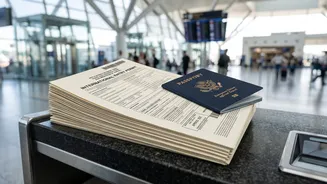






That feeling of wanderlust is stronger than ever, but the dream of a seamless international trip often crashes into a wall of confusing paperwork and unpredictable rules. A new report confirms you are not alone in your frustration.
The Growing Toll of Travel Complexity
The International Air
Transport Association (IATA) has put a number on this widespread sentiment. According to its 2026 Global Passenger Survey, a staggering 43% of travelers have been discouraged from visiting a destination specifically because of its immigration requirements. This is a significant jump from 33% in 2025, indicating that as the world moves on, the administrative barriers to travel are surprisingly getting worse, not better. The primary culprit isn't cost or privacy concerns, which each accounted for 17% of dissuaded travelers. Instead, the overwhelming reason, cited by 53% of those deterred, is the sheer complexity of the process itself. This data paints a clear picture: potential tourists are looking at the tangle of visa applications and entry rules and deciding it’s simply not worth the effort.
A Patchwork of Inconsistent Rules
So, what makes the process so difficult? The issue lies in the lack of standardization between countries. While over 100 countries now issue eVisas, there is little consistency in how they are formatted or verified, creating a digital headache for both travelers and airlines. This inconsistency forces airlines to grapple with a patchwork of regulations that can change with little notice. One country might require a specific type of digital health record, while another might only accept paper. These unpredictable and often duplicative checks create friction, delays, and uncertainty. Nick Careen, IATA's Senior Vice President, noted that this complexity acts as a direct barrier to global mobility and economic recovery. The dream of a single, recognized digital travel credential remains just that—a dream—while the reality is a frustrating maze of differing national policies.
The Economic Ripple Effect
When travelers stay home, economies feel the pinch. The 10-percentage-point increase in passengers deterred by immigration rules represents a massive loss of potential revenue for the tourism and aviation industries. For airlines, complex rules lead to higher operational costs, including expenses related to passengers being denied entry, which can range from $4,000 to $14,000 per case. For destination countries, especially those reliant on tourism, these barriers mean fewer visitors, less spending in local economies, and a slower-than-expected recovery. The IATA report highlights a clear disconnect: while passengers are eagerly embracing technology like AI for travel planning and biometrics for airport speed, the foundational government processes for entry and exit have not kept pace. This disconnect is not just an inconvenience; it is a direct impediment to economic growth.
Passengers Signal a Clear Path Forward
Despite the frustrations, travelers are not anti-technology or anti-security. In fact, the survey shows they are overwhelmingly in favor of digital solutions that simplify the process. A remarkable 86% of passengers are willing to share their immigration information digitally before departure to speed things up. Furthermore, 78% would happily share biometric information if it meant a smoother, faster journey through the airport without repeatedly showing documents. The message from consumers is clear: they want to complete procedures online, in advance, and through standardized, secure systems. IATA is urging governments to listen to this demand by working together on a common framework for Digital Travel Credentials—a form of secure digital passport that could be recognized globally. Adopting such standards would eliminate the complexity and uncertainty that currently plagues international travel.