


Just How Crowded Is It Up There?
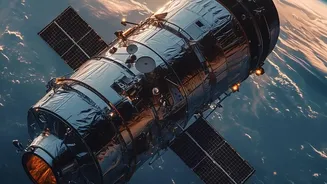
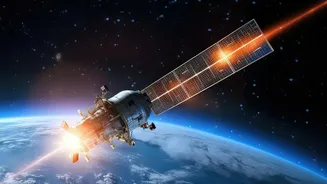
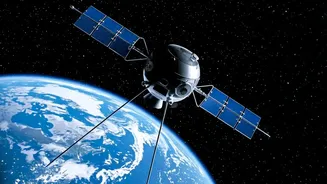
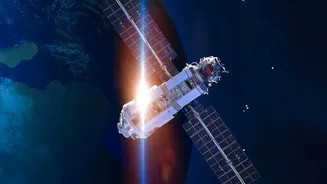
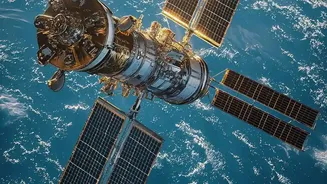
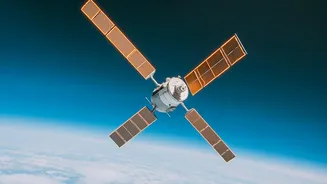
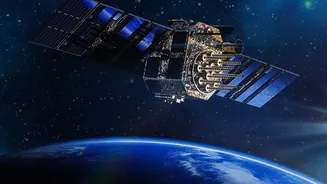
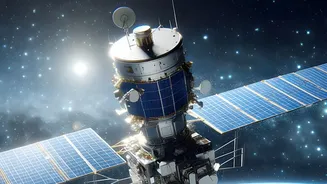
As of late 2026, the number of active satellites orbiting our planet has soared to nearly 17,000. This figure varies slightly between tracking agencies, but they all agree on the trend: the population has exploded, roughly tripling since 2021. A significant
driver of this growth is the deployment of 'mega-constellations'—vast networks of satellites working in concert. The most prominent of these, SpaceX's Starlink, accounts for an astonishing two-thirds of all active satellites, with over 11,000 spacecraft in orbit to provide global internet coverage. This recent surge means the orbital environment has changed more in the last six years than in the previous sixty combined.
The Rise of the Mega-Constellations
The boom is primarily concentrated in Low Earth Orbit (LEO), an orbital band up to 2,000 kilometres in altitude that is ideal for communications and Earth observation. Historically the domain of governments and a few large corporations, LEO is now the target for ambitious commercial ventures. Beyond SpaceX, companies like Amazon with its planned Project Kuiper and China's Qianfan and Guowang constellations are poised to launch tens of thousands more satellites in the coming years. The goal is to blanket the globe with high-speed internet, a lucrative and transformative service. But this rapid commercialization comes with a significant side effect: unprecedented orbital density.
Dodging Bullets in the Final Frontier
More satellites mean a higher risk of collision. This isn't just about active satellites hitting each other. The bigger problem is space debris: defunct satellites, spent rocket stages, and fragments from past collisions. There are over 31,000 tracked objects larger than 10 cm, but only about half are operational satellites; the rest is junk. Models estimate there are over a million untracked pieces of debris between 1 and 10 cm, each capable of catastrophically damaging or destroying a satellite upon impact. Consequently, satellite operators must perform an ever-increasing number of collision-avoidance manoeuvres. SpaceX's Starlink constellation alone performed over 355,000 such manoeuvres in the last year, a number that has been doubling roughly every six to twelve months. Each manoeuvre, a small thruster burn to alter a satellite's path, is a response to a potential close call.
The Specter of Kessler Syndrome
The ultimate fear is a scenario known as the 'Kessler Syndrome', first proposed by NASA scientist Donald Kessler in 1978. He theorized that if the density of objects in LEO reaches a critical point, a single collision could generate a cloud of debris. Each piece of that debris could then cause further collisions, creating a chain reaction that exponentially increases the amount of junk. This runaway effect could eventually render entire orbital bands unusable for generations, jeopardizing everything from GPS and weather forecasting to global communications. Experts warn that even if all launches stopped today, the debris population would continue to increase on its own through this cascading process.
The Search for Solutions
Addressing this growing crisis is a monumental task. The space community is focused on 'Space Traffic Management'—a set of practices and technologies to coordinate and monitor objects in orbit, much like air traffic control on Earth. New regulations are being discussed to ensure satellites can be safely de-orbited at the end of their lifespan, rather than being left as potential hazards. Technologically, companies are developing solutions ranging from AI-driven automated collision avoidance systems to ambitious concepts for active debris removal, essentially 'space tugs' that could capture and remove the most dangerous pieces of junk. The European Space Agency has been a vocal proponent of such measures, warning that without active removal, some orbits are on track to become unusable.