







As India’s ambitious Gaganyaan mission moves closer to reality, its chosen astronauts are undergoing some of the most unique training on Earth. A crucial phase in Russia involves learning to operate in an environment few will ever experience: weightlessness.
The Final Frontier for India
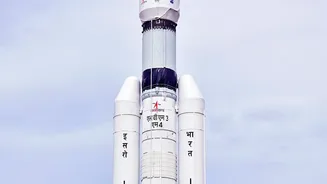
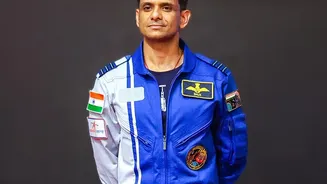
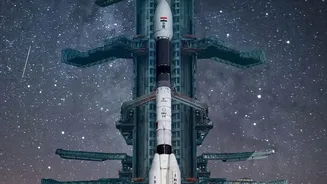
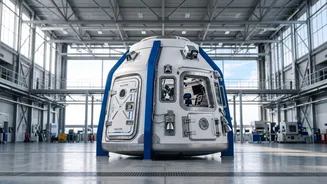
The Gaganyaan programme is ISRO's landmark initiative to send Indian astronauts, or 'Vyomanauts', into a low-Earth orbit of 400 kilometres for a mission lasting several days. This historic endeavour will make India the fourth nation in the world—after Russia, the United States, and China—to independently launch a crewed spacecraft. The success of this complex mission hinges not just on advanced technology, but on the rigorous preparation of its human crew. They must be ready to handle everything from routine operations to unexpected emergencies in the unforgiving environment of space, and that training is a multi-faceted global effort.
Why Russia? A Legacy of Collaboration
India and Russia share a deep, decades-long partnership in space exploration, which began with the launch of India's first satellite, Aryabhata, on a Soviet rocket in 1975. This collaboration continued with Rakesh Sharma becoming the first Indian in space aboard a Soviet Soyuz spacecraft in 1984. For the Gaganyaan mission, Russia is providing critical support, including astronaut training at the renowned Yuri Gagarin Cosmonaut Training Center, often called Star City. This facility has prepared generations of cosmonauts and astronauts, offering expertise and infrastructure that is essential for preparing India's crew for the physiological and psychological demands of spaceflight.
The 'Vomit Comet': A Fall Towards Space
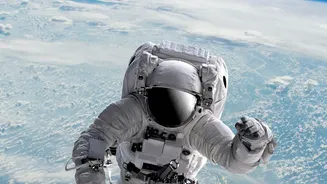
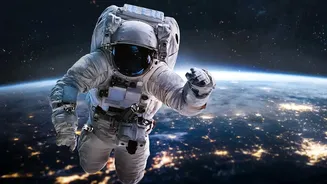
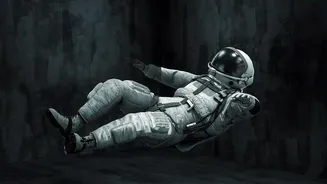
To prepare for the weightlessness of orbit, astronauts train in a specially modified Ilyushin Il-76 MDK aircraft. Often nicknamed the 'vomit comet', this flying laboratory creates brief periods of zero gravity right here on Earth. It does this by flying in a parabolic arc—a steep climb followed by a sharp dive. As the aircraft goes over the top of this arc and begins to descend, it enters a state of freefall. For about 22 to 28 seconds, everything inside the aircraft, including the astronauts, falls at the same rate, creating a sensation identical to being weightless in space. During a single flight, the pilots can perform 10 to 15 of these manoeuvres, giving the crew precious minutes to adapt.
Coordination in Chaos
Those brief moments of weightlessness are invaluable. Simple tasks on Earth become incredibly complex when up is no longer a fixed direction. Without gravity, astronauts can find themselves disoriented, and any stray push can send them tumbling. During these parabolic flights, the Gaganyaan crew practices fundamental skills like controlling their body movements, orienting themselves, and coordinating actions with their crewmates. They learn to move deliberately, pushing off surfaces to travel across the cabin and steadying themselves with handrails. This training is as much about building psychological resilience as it is about physical adaptation, ensuring they can remain calm and work effectively as a team when faced with the disorienting reality of space.
A Comprehensive Regimen
Zero-gravity flights are just one component of an exhaustive training schedule. The astronauts' preparation includes everything from intense physical conditioning and survival training for various terrains to operating mission-specific systems in high-fidelity simulators. They learn to handle spacecraft operations, respond to emergencies like fires or depressurisation, and perform scientific experiments. Other training methods, such as neutral buoyancy labs where astronauts practice spacewalks in giant swimming pools, also simulate aspects of the space environment. Each part of this regimen is designed to build a crew that is not just technically proficient but also mentally prepared for the journey of a lifetime.