




Scheduled Arrival: The Official Timetable
When you book a train ticket, you see a 'Scheduled Arrival' time. This is the official time your train is slated to pull into your destination station under ideal conditions. It's the number printed on your ticket and listed in the timetable. Think of it as
a perfect-world scenario. In normal weather, trains often run close to this schedule. However, this time doesn't account for unforeseen operational issues or, most importantly during winter, weather disruptions. It's the baseline from which all delays are measured, but it's not a guarantee.
The Reality: Delays and 'Final Transfer'
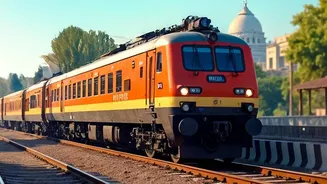
The term 'Final Transfer' isn't an official Indian Railways term, but it perfectly captures the practical end of your journey. This is the moment you actually get off the train, gather your luggage, and are free to 'transfer' to your next mode of transport—be it a taxi, a connecting train, or the station exit. In winter, the gap between 'Scheduled Arrival' and 'Final Transfer' can be significant. Your train might officially 'arrive' by reaching the outskirts of the destination city, but then wait for a long time for platform availability or signal clearance, which are common issues during heavy fog. This waiting period is what extends your travel time long after the train has technically reached its destination city.
Why Winter Fog Causes Major Delays
The primary culprit for winter travel chaos in North India is dense radiation fog. This fog can reduce visibility for loco pilots to just a few metres, making it extremely dangerous to operate trains at normal speeds. For safety, railways impose strict speed restrictions. This has a cascading effect: a single delayed train occupies a track longer than planned, forcing subsequent trains to slow down or stop, leading to a chain reaction of delays across the network. This can lead to crew shortages due to longer working hours and throw the entire timetable into disarray.
How to Accurately Track Your Train
Don't rely solely on the scheduled time. The best way to get real-time information is by using the National Train Enquiry System (NTES), the official Indian Railways platform. You can access NTES via its website or mobile app. By entering your train number, you can see its last reported location, the estimated time of arrival (ETA) at upcoming stations, and any known delays. Many third-party apps like MakeMyTrip and ixigo also use this official data to provide tracking services. It’s wise to check your train's status the night before and again just before you leave for the station.
Essential Tips for Winter Train Travel
Preparation can make a huge difference when facing unpredictable delays. Always pack extra food and water. Carry a fully charged power bank, as you may be on the train far longer than expected. Dress in layers; while the coach may be warm, station platforms can be freezing. If possible, avoid booking tight connecting journeys, as a delay in one leg can disrupt your entire trip. Keeping essentials like medicines, tickets, and your phone in a small, accessible bag is also a smart move. If your train is delayed by more than three hours and you decide not to travel, you are entitled to file a TDR (Ticket Deposit Receipt) for a full refund.