






The Game Changer: Mission: Impossible
When Tom Cruise signed on to star in the 1996 adaptation of 'Mission: Impossible', he didn't just take a role—he took control. By serving as a producer, he negotiated a deal that gave him a significant percentage of the film's profits. This move earned
him a reported $70 million for the first film alone. This became his signature strategy: betting on the success of his own projects. For 'Mission: Impossible 2', he reportedly waived his salary entirely in exchange for a larger share of the profits, walking away with an estimated $100 million. The franchise has since become the financial bedrock of his career, with each installment adding tens of millions to his wealth through similar profit-sharing agreements.
The Billion-Dollar Payday: Top Gun: Maverick
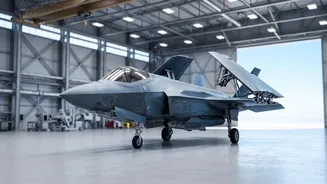
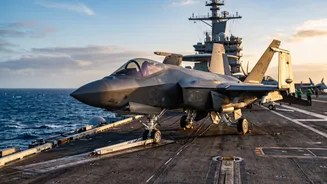
Decades after the original, 'Top Gun: Maverick' soared to unprecedented heights, grossing nearly $1.5 billion worldwide and becoming the biggest hit of Cruise's career. While his initial salary was a relatively modest $12-14 million, his real genius was in the deal structure. Cruise secured a 'first-dollar gross' deal, which entitled him to over 10% of the film's revenue after theaters took their cut, but before the studio recouped its own costs. This rare and powerful arrangement, a testament to his star power, resulted in a total estimated payday of over $100 million for the single film. For comparison, his salary for the original 1986 'Top Gun' was $2 million.
The $100 Million Gamble: War of the Worlds
Long before 'Maverick', Cruise perfected the high-risk, high-reward model with Steven Spielberg's 2005 sci-fi thriller, 'War of the Worlds'. Instead of taking his standard $20 million-plus salary, he opted for a significant percentage of the movie's profits. As the film grossed over $600 million globally, the bet paid off spectacularly. Reports indicate that Cruise earned a massive $100 million from the deal, making it one of the largest single-film paydays for an actor at the time and cementing his status as a master negotiator.
The Architect of the Deal
The common thread through Cruise's immense earnings is his shift from being just an actor for hire to a powerful producer-partner. By forming his own production company with Paula Wagner in the early 1990s, he gained the leverage to demand a stake in his projects. While other stars get a share of the 'net' profits—a figure that can be reduced to zero by studio accounting—Cruise often secures 'gross' points. This means he gets a piece of the revenue from the very first ticket sold. This strategy, which he has employed for decades, is the true engine behind his estimated $600 million net worth, proving that the biggest stunts he pulls aren't always on screen.