







The Gatekeeper of the Indus
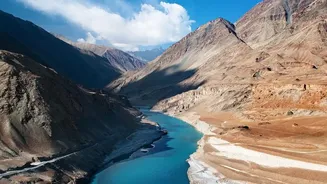
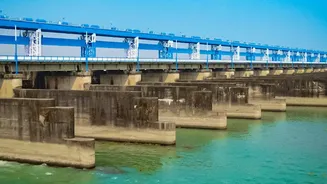
Established in 1992, the Indus River System Authority (IRSA) is the primary body responsible for managing and regulating Pakistan's most critical resource: the water of the Indus River and its tributaries. Its core mandate, outlined in the Water Apportionment
Accord (WAA) of 1991, is to estimate the total water available each season and distribute it among the four provinces: Punjab, Sindh, Khyber Pakhtunkhwa, and Balochistan. This task is monumental. The Indus Basin Irrigation System is one of the world's largest, and nearly 95% of Pakistan's renewable water resources flow through it, underpinning the country's agriculture and food security. Each year, IRSA makes two crucial forecasts: one for the summer Kharif season (April-September) and one for the winter Rabi season (October-March). These decisions dictate how much water each province gets to irrigate vital crops like wheat, cotton, and rice.
A Forecast Built on Forecasts
The headline's circular phrasing hints at the fundamental challenge IRSA faces: predicting the future. The agency's forecasts for water availability are primarily based on 'anticipated river inflows'. But what are these anticipations based on? It's a mix of historical data, probabilistic models, and recent trends. For the major western rivers like the Indus, Jhelum, and Chenab, IRSA often uses a probabilistic method that considers inflow volumes from the previous season as an indicator for the upcoming one. This is combined with data from a complex modelling tool, jointly developed with international partners, that runs various scenarios. For the smaller eastern rivers, the forecast often relies on the observed inflow history from the last five years. This means the entire water budget for a nation of over 240 million people is essentially a highly educated estimate, an exercise in planning based on layers of projections rather than guaranteed certainties. This reliance on forecasts is necessitated by limited water storage capacity and the high variability of river flows, which are dependent on snowmelt and monsoon rains.
The Rabi 2026-27 Verdict: A 22% Shortfall
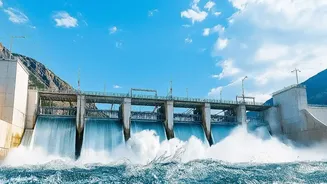
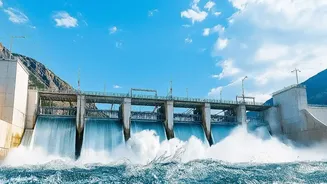
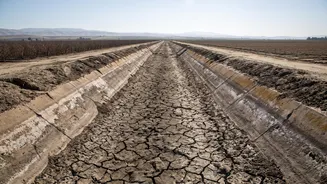
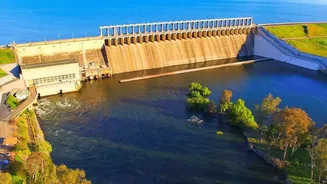
For the current Rabi season, which runs from October 2026 to March 2027, IRSA has projected a significant water shortage of 22%. This decision was made in early October by IRSA's Advisory Committee. The brunt of this shortage will be borne by the agricultural heartlands of Punjab and Sindh, as the water accord exempts Balochistan and Khyber Pakhtunkhwa from cuts during shortages. The forecast is a result of several compounding factors. The preceding Kharif season saw river inflows that were 8% below anticipation and 22% lower than the previous year. Furthermore, reservoir levels on September 30 were at 9.343 million acre-feet (MAF), significantly lower than the 13.214 MAF stored at the same time last year and below the ten-year average. Delays in crucial infrastructure projects at the Tarbela dam also prevented the storage of several million acre-feet of water, further exacerbating the situation.
A Ripple Effect on Food Security
A 22% water shortage is not just a statistic; it has immediate and severe consequences for Pakistan's food security and economy. The Rabi season is dominated by wheat, the country's main staple crop. A lack of sufficient irrigation water could force farmers to rely on expensive groundwater pumping or lead to lower crop yields. This comes at a precarious time. Even last year, without a major water shortage, Pakistan's wheat production fell short of domestic needs, compelling the government to import over a million tons. Flour prices have already surged, with reports in September showing a price increase of over 30% compared to the previous year. The projected shortfall for the current season threatens to worsen this situation, potentially leading to another poor harvest and increased reliance on costly imports to feed the population.
A System Under Strain
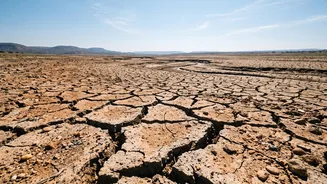
IRSA's forecasting and distribution process is a constant source of tension. The methodology, while based on technical models, operates in a politically charged environment where mistrust between provinces, particularly between upper-riparian Punjab and lower-riparian Sindh, is common. Sources suggest that for the current Rabi season, Punjab and the national power authority had projected an even higher shortage of 26%, but the final figure was settled at 22% after debate within the advisory committee. Beyond the internal politics, the entire system is under increasing strain from long-term challenges. Rapid population growth, climate change altering flow patterns, and aging infrastructure all contribute to Pakistan's growing water crisis. The country is rapidly moving from being 'water-stressed' to 'water-scarce', with per capita water availability having plummeted from over 5,000 cubic meters in the 1950s to around 1,000 in recent years. This makes every drop of water, and how it is forecast and shared, more critical than ever.