







The Indian Space Research Organisation is set for a dynamic period of activity. Its upcoming launch schedule is packed with missions for both the Polar Satellite Launch Vehicle (PSLV) and the Small Satellite Launch Vehicle (SSLV).
The Workhorse and The Newcomer
At the heart of India's
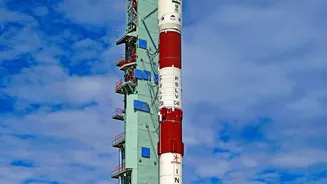
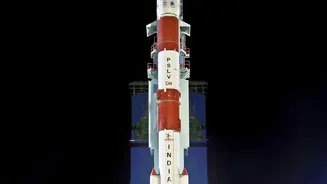
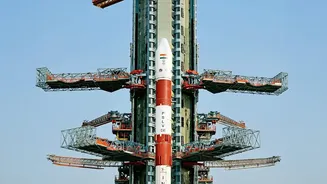
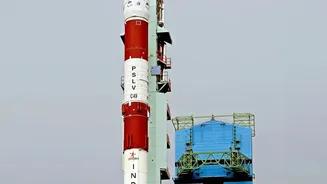
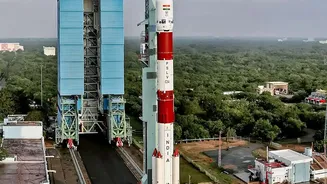
space ambitions are two key launch vehicles: the PSLV and the SSLV. Think of the PSLV as the seasoned, reliable workhorse of ISRO. For decades, it has been the go-to rocket for launching a wide variety of satellites, from domestic earth observation and navigation satellites to prestigious international payloads. Its consistency and versatility have earned it a global reputation as a dependable launch platform. On the other hand, the SSLV is the agile newcomer, designed specifically for the booming global market of small satellites. Where the PSLV is built for larger, more complex missions, the SSLV is engineered for speed and efficiency. It offers a 'launch-on-demand' capability, meaning it can be assembled and launched in a much shorter timeframe, making it an attractive and cost-effective option for commercial clients looking to send smaller payloads into Low Earth Orbit.
PSLV's High-Profile Payloads
ISRO's schedule highlights the continued trust in the PSLV for complex and high-value missions. A significant upcoming mission for the PSLV is the launch of the Technology Demonstration Satellite (TDS-01), slated for late 2026. This mission is crucial for testing new space technologies in orbit, including advanced propulsion systems that could power future interplanetary journeys. Another key mission in early 2027 is for the Earth Observation Satellite EOS-10, also known as Oceansat-3A, which will provide vital data for oceanography and climate studies. These missions underscore the PSLV's role not just as a commercial launcher but as a critical tool for India's scientific and strategic goals. Recent statements from ISRO officials confirm plans for at least two PSLV missions in the current financial year, reinforcing the rocket's busy manifest. The pipeline also includes future missions like RISAT-2A and a joint mission with Japan, ISSA-J1, demonstrating the PSLV's enduring importance.
SSLV: Tapping the Small Satellite Market
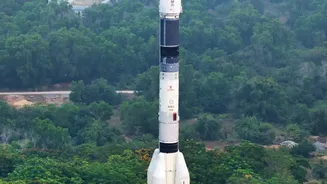
The Small Satellite Launch Vehicle (SSLV) is ISRO's answer to the growing demand for dedicated small satellite launches. After a successful development phase, the SSLV is now entering its operational phase with a clear commercial focus. An upcoming SSLV launch will carry AayulSAT-1A, a rideshare mission with multiple small satellites, including one designed to demonstrate in-orbit refueling technology. Another planned SSLV mission in early 2027 is slated to launch SBS-3, a satellite for a surveillance constellation. ISRO leadership has indicated that at least two SSLV launches are planned for the near future, signalling a ramp-up in its operational tempo. This increased launch frequency is managed by NewSpace India Limited (NSIL), ISRO's commercial arm, which markets these launches to international clients. The goal is clear: to capture a significant share of the multi-billion-dollar small satellite launch market with a rocket that is quick, affordable, and reliable.
A New Era for Indian Spaceflight
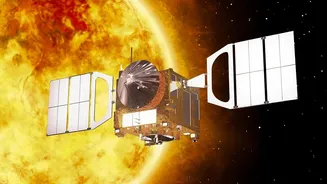
This packed schedule of PSLV and SSLV launches represents more than just a busy calendar; it signals a strategic shift for ISRO. By operating two distinct launch systems in parallel, India is catering to both large scale national missions and the fast paced commercial market. This dual approach is a cornerstone of India's 'Aatmanirbhar Bharat' (self reliant India) policy in space. The PSLV ensures that India maintains its autonomy in launching critical scientific, defense, and infrastructure related satellites. Simultaneously, the SSLV, driven by NSIL, is positioned to generate significant foreign exchange and strengthen India's foothold in the global space economy. This strategy allows ISRO to focus its core research and development on ambitious future projects, such as the Gaganyaan human spaceflight program and missions to the Moon and Venus, while the commercial operations are streamlined through NSIL. This synergy between scientific exploration and commercial enterprise is set to define the next chapter of India's celebrated space journey.