






A Clock Made of Rust
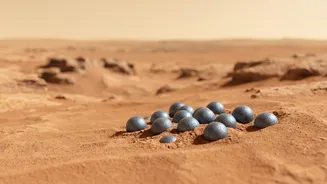
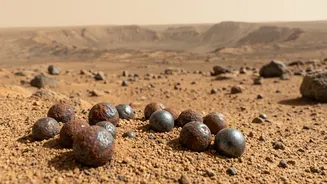
At the heart of this discovery is hematite, a form of iron oxide more commonly known as rust. For years, scientists have used hematite as a tell-tale sign of past water on Mars, as it forms when iron reacts with water. But a recent study of data from
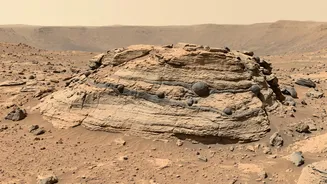
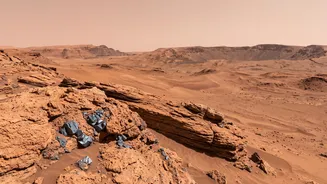
NASA's Curiosity rover has revealed a deeper secret. Researchers found that the tiny crystals making up the hematite are more than just a sign of water; their size acts as a geological clock, recording how long that water was present and how warm it was. This provides a physical way to trace the history of water, rather than relying solely on computer models. The team analysed 20 rock samples drilled by Curiosity at different depths within Gale Crater, a location the rover has been exploring for over a decade. This crater provides a layered record of Mars's history, with deeper rocks representing earlier periods.
Reading the Crystal Timeline
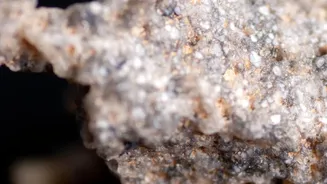
The new method works by measuring the precise size of mineral crystals. The Curiosity rover uses an instrument called CheMin, which fires X-rays at powdered rock samples to analyse their structure. Scientists discovered that hematite crystallites from deeper, older layers in Gale Crater were significantly larger—up to 65 nanometers—than those in younger, higher layers, which were often less than 10 nanometers. This size difference is critical. Laboratory experiments show that larger hematite crystals form under warmer conditions where water persists for long periods. In contrast, smaller crystals suggest colder, more water-limited environments. This discovery allows scientists to essentially read the rocks like tree rings, tracing the gradual shift from a long-lasting warm and wet climate to a cold, dry one.
A More Gradual Goodbye
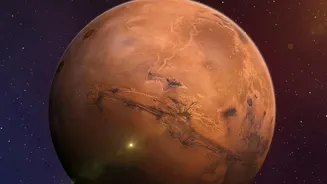
This finding refines our understanding of how Mars lost its water. Instead of a single, catastrophic event, the evidence points to a much more gradual drying process. The larger crystals in the deeper rock layers suggest that warm groundwater may have persisted for millions of years, even as the surface lakes and rivers began to vanish. The study suggests that long-lived underground aquifers could have remained for up to 4.7 million years in the deepest parts of Gale Crater. This lingering subsurface water would have been protected from the increasingly harsh surface conditions, including cold temperatures and radiation. This paints a picture of a planet that didn't just dry out overnight but experienced a slow, prolonged transition, with pockets of water holding on deep underground.
Implications for the Search for Life
Pinpointing when and for how long liquid water existed is crucial for the search for ancient life on Mars. The idea that potentially habitable environments existed underground for millions of years after the surface became inhospitable is a tantalizing prospect for astrobiologists. Water deep underground, shielded from radiation, is considered a much more promising place to look for signs of past life. While this new dating method does not prove that life ever existed on Mars, it gives scientists a powerful new tool to identify the most promising locations to search for biosignatures. By understanding the timeline of water more precisely, missions like the Perseverance rover, which is currently collecting samples in Jezero Crater for a potential return to Earth, can better target their efforts. These tiny crystals are helping to write a more detailed history of Mars's past and, in doing so, are guiding the search for life beyond Earth.