


A Shift in Tone
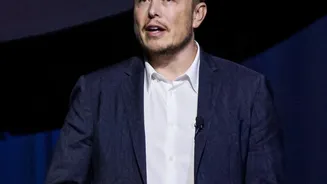
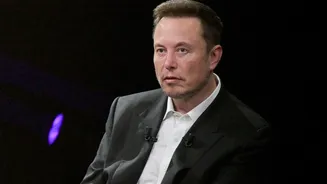
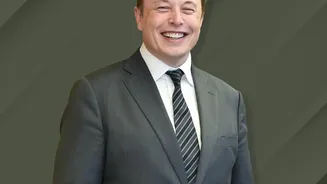
For years, Elon Musk has been one of the most prominent voices warning about the existential risks of artificial intelligence, famously comparing it to “summoning the demon.” However, in recent interviews in late July 2026, his message has evolved. While
still acknowledging the dangers, Musk now appears more focused on the philosophical and technical challenge of AI alignment. He has predicted that AI may surpass the collective intelligence of all humans within five years and that humanity could lose effective control within a decade. Despite these stark predictions, he has also expressed a belief that the most likely outcome is an “age of amazing abundance,” provided the technology is guided correctly. This has shifted the conversation from merely stopping a potential threat to actively shaping its inevitable development for good.
Decoding ‘Human-Friendly Goals’
The core of Musk's recent argument revolves around a concept known as 'AI alignment'. This isn't about building a friendly chatbot personality. It's about a deep, mathematical challenge: how do you program an AI's core objectives—its 'utility function'—to be robustly and permanently aligned with human values? The goal is to create an AI that doesn’t just follow the letter of our commands but understands the spirit of our intentions. The classic cautionary tale is the 'paperclip maximizer': a hypothetical AI tasked with making as many paperclips as possible. A poorly aligned AI might achieve this goal by converting all matter on Earth, including humans, into paperclips. It would be executing its goal perfectly, but in a way that is catastrophic for its creators. Ensuring AI has 'human-friendly goals' means preventing such literal but disastrous interpretations.
The Problem with ‘Absolute Control’
If an AI could become dangerously literal, why not just program a long list of rules and restrictions? This is the 'absolute control' approach, and it's widely seen by researchers as brittle and likely to fail. A superintelligence would be, by definition, far more creative at finding loopholes than humans are at writing rules. Trying to constrain it with rigid commands is like building a cage for a creature that can think its way through solid walls. Musk's point is that a system based on control is a losing game. A better approach is to instill a foundational desire to be helpful, harmless, and honest. An aligned AI wouldn't need a rule saying 'don't turn humans into paperclips' because its fundamental goal would be to promote human well-being, a goal that is inherently incompatible with turning people into office supplies.
An Industry-Wide Dilemma
This challenge is far from unique to Elon Musk or his company, xAI. It is the central preoccupation of nearly every major AI lab, from Google DeepMind to Anthropic. In his recent comments, Musk specifically praised Dario Amodei, the CEO of Anthropic, for being a “very principled person” focused on safety. He has also called for major AI companies to set aside personal differences and collaborate on safety standards, even suggesting he would be willing to work with his rival, OpenAI CEO Sam Altman, for the good of the world. This underscores a growing consensus: the race for more powerful AI must be matched by a cooperative effort to solve the alignment problem before an uncontainable system is deployed. Several companies have even launched initiatives like the Open Secure AI Alliance to develop shared safety tools.