





Understanding the UPI Fee Structure
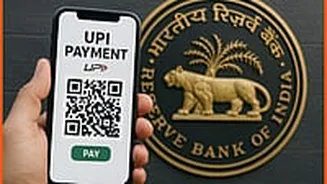
Until now, most conversations about UPI focused on its biggest selling point for users: it's free. However, behind the scenes, there's a complex system that needs funding. The Merchant Discount Rate (MDR) is a fee that businesses pay to their bank or payment
service provider for processing digital transactions. While person-to-person (P2P) UPI payments remain free, the National Payments Corporation of India (NPCI) has introduced a new MDR framework for person-to-merchant (P2M) payments to ensure the ecosystem remains financially sustainable for the banks and payment companies that run it. This isn't a fee charged to customers, but rather to the businesses receiving the payment. The government has explicitly stated that merchants should not pass this cost on to consumers.
What Exactly Is Changing?
Effective October 15, 2026, a new rule kicks in: a 0.4% MDR will apply to many merchant UPI transactions. However, for certain essential services, the NPCI has opted for a different model. Instead of a percentage-based fee that grows with the transaction amount, a simple, flat fee will be charged. The sectors identified for this special treatment include railways, telecom services, insurance, fuel, and public utilities like electricity and water bills. For these categories, the new rule substitutes the standard 0.4% MDR with a concessional flat fee. This move is designed to prevent processing costs from becoming too high on large but essential payments, which could discourage digital adoption.
The Key Qualification: A Tale of Two Tiers
Here is the critical detail: the new MDR structure—both the percentage-based and the flat fee—only applies to transactions above ₹2,000. Any UPI payment a merchant receives that is ₹2,000 or less will continue to have zero MDR. This is the key qualification. For a utility company, this means that if a customer pays a bill of ₹1,500 via UPI, there is no MDR. But if they pay a bill of ₹3,000, the new flat fee of ₹5 applies. The same logic applies to other sectors; a standard merchant would pay a 0.4% fee on a ₹3,000 transaction, which amounts to ₹12. The ₹2,000 threshold is designed to protect the vast majority of small, everyday transactions from any charges, insulating both consumers and small businesses from the change.
Why This Matters for Utility Providers
The flat-fee model for high-value transactions is a significant benefit for businesses in the utility, telecom, and insurance sectors. Consider an insurance company collecting an annual premium of ₹50,000. Under a standard 0.4% MDR, the fee would be ₹200. But with the new rule, the company only pays a flat ₹5 fee. This incentivises large billers to continue and even expand their acceptance of UPI for high-ticket payments without worrying about escalating processing costs. It ensures that essential services remain digitally efficient and low-cost for merchants, which in turn benefits consumers through continued convenience. Furthermore, automated recurring payments set up via UPI AutoPay for bills and subscriptions are exempt from these MDR charges altogether, encouraging a shift towards automated payment cycles.
Impact on Consumers and Small Businesses
For the average person, nothing changes. UPI remains free for all P2P transfers and for payments to merchants. The MDR is borne by the merchant. Small merchants, defined as those receiving up to ₹1 lakh per month via UPI, are also exempt from these charges, ensuring that neighbourhood shops and street vendors are not burdened. The goal of the tiered system is to create a sustainable revenue model for the payment ecosystem's operators without affecting the everyday user or small business owner. The changes are aimed squarely at larger merchants and higher-value transactions, striking a balance between UPI's public-good nature and the commercial realities of maintaining its vast infrastructure.