







India’s Answer to GPS
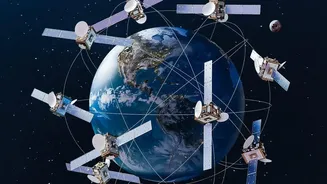
NavIC, short for Navigation with Indian Constellation, is ISRO's ambitious project to provide the country with its own independent navigation system. Conceived after the Kargil War in 1999, when India was denied access to foreign-operated GPS data, NavIC was designed
to ensure strategic autonomy. The system is designed to provide accurate positioning information for users within India and a region extending up to 1,500 kilometers from its borders. It offers two main services: a Standard Positioning Service (SPS) for all civilian users and a more accurate, encrypted Restricted Service (RS) for strategic and military applications. Having a sovereign system is crucial, as it guarantees uninterrupted access to navigation for military operations, disaster management, and critical infrastructure, free from the control of other nations.
The Problem with the Clocks
The 'recovery' of NavIC is necessary because its first generation of satellites, known as the IRNSS series, has been plagued by a persistent and critical issue: the failure of their atomic clocks. Think of an atomic clock as the super-precise heart of a navigation satellite. It measures time with incredible accuracy, which is essential for calculating a user's position on Earth. Even a tiny error of one-billionth of a second can throw a location off by several metres. Unfortunately, the imported rubidium atomic clocks on multiple IRNSS satellites failed well before their expected lifespan, rendering several satellites unusable for navigation. With recent failures, the number of fully functional satellites in the constellation dropped to three, one short of the minimum four required to provide an accurate position fix, effectively making the standalone NavIC service inactive.
Enter NVS-03: A Generational Upgrade
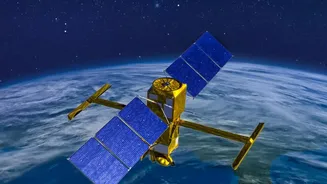
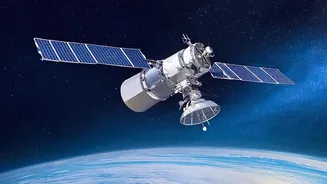
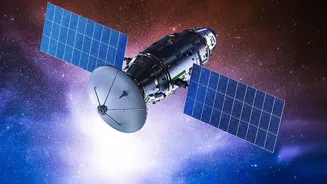
The NVS-03 satellite is the third in a new, second generation of NavIC satellites designed to replenish and upgrade the constellation. The most significant improvement in the NVS series is the inclusion of an indigenously developed rubidium atomic clock. Developed by the Space Applications Centre in Ahmedabad, this homemade clock is designed to be more reliable than the imported ones that previously failed. This move not only addresses the system's primary technical weakness but also marks a major step forward in India's technological self-reliance. Beyond the clock, NVS-03 and its brethren feature a longer mission life of 12 years and broadcast on the L1 frequency band, which is widely used by consumer devices like smartphones and wearables. This addition is expected to make it much easier for NavIC to be adopted by the mass market.
A High-Stakes Launch
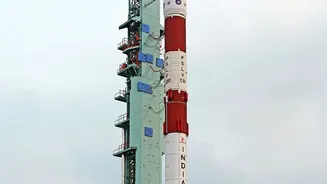
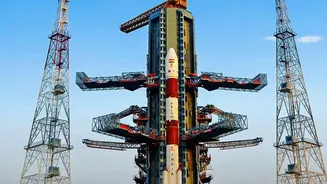
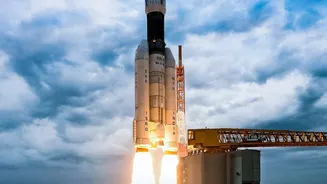
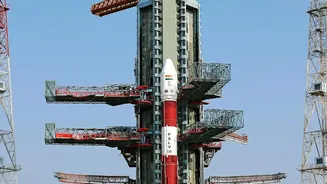
The upcoming launch of NVS-03, targeted for mid-October 2026, is therefore much more than a routine mission. It is a high-stakes test for the entire NavIC program. A successful launch will bring the number of operational satellites back to the crucial threshold of four, restoring NavIC's ability to provide independent positioning services. This is vital for India’s security forces, who depend on a sovereign navigation system for everything from missile guidance to troop movements without relying on foreign networks. The launch also comes after the NVS-02 mission failed in January 2025 to reach its intended orbit, adding to the pressure. A successful NVS-03 mission would validate ISRO's corrective measures and its new indigenous clock technology, paving the way for the system's full recovery and future expansion.
The Future of Indian Navigation
Looking ahead, a successful NVS-03 launch is the first step in a broader plan to revitalise and expand India's navigation capabilities. ISRO has two more satellites, NVS-04 and NVS-05, in advanced stages of realisation to further bolster the constellation. A fully restored and robust NavIC system will have far-reaching benefits. For the military, it guarantees a secure and reliable tactical advantage. For civilians, it opens the door to wider integration into logistics, transportation, and everyday consumer electronics, from commercial vehicle trackers to smartphones. Ultimately, a functional NavIC is a cornerstone of India's strategic independence, demonstrating its prowess in critical space technologies and ensuring the nation is not reliant on others for a service that has become indispensable in the modern world.