





What Exactly Is Changing?
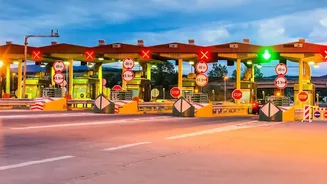
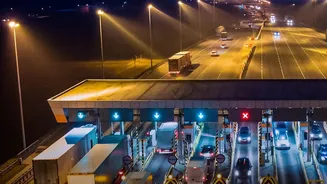
The Ministry of Road Transport and Highways has rolled out a revised formula for calculating the chargeable distance on national highways that feature complex structures. Previously, the high cost of building bridges, tunnels, and flyovers meant that tolls
on these sections were often calculated using a high multiplier, sometimes treating 1 km of a bridge as 10 km of regular road. Under the new rules, authorities will use a different method. They will compare two calculations: one, ten times the length of the structure plus the remaining highway length, and two, five times the total length of the entire highway section. Crucially, they will use whichever of the two calculations results in a lower figure to determine the toll. This change, which applies to structures longer than 60 metres, introduces a cap that was not there before, aiming to make toll collection fairer for commuters.
A Welcome Relief for Commuters
For the millions of people who frequently travel on India's national highways, this new calculation could mean tangible savings. The revision is expected to reduce toll charges for many road users, particularly on routes with a significant number of bridges, tunnels, or elevated corridors. For example, on a 40-km highway that includes 30 km of structures, the chargeable length would now be capped at 200 km instead of the previous 310 km. The government's stated intention is to balance the recovery of high construction costs with affordability for the public. While actual savings will vary depending on the specific highway, the move is a clear benefit for motorists and commercial vehicle operators who rely on these critical arteries for daily travel and logistics.
Why the Strategic Shift Now?
This policy adjustment is more than just a new way to calculate tolls; it reflects a strategic pivot in India's infrastructure development. By changing the financial appraisal of these projects, the NHAI is incentivising the construction of complex but vital infrastructure. These structures are essential for conquering geographical barriers, such as in the Himalayas or across wide rivers like the Brahmaputra, improving connectivity to remote regions, and cutting down travel times. For years, the focus was often on adding kilometres to the highway network. Now, the emphasis is shifting towards building more strategic and technically ambitious projects that can unlock economic potential in challenging terrains. This approach also makes these capital-intensive projects more attractive to private developers under models like Build-Operate-Transfer (BOT), as it provides a clearer path to viability.
Ensuring Quality and Safety
Alongside this focus on large-scale structures, the NHAI is also tightening its standards for quality and safety. In a parallel move, the authority is establishing a nationwide framework to have the designs of all critical bridge projects independently vetted by premier technical institutions like the Indian Institutes of Technology (IITs). This initiative aims to ensure that major bridges, which are designed for a service life of 100 years or more, undergo rigorous technical reviews before construction even begins. The independent vetting will cover everything from structural design and engineering drawings to hydraulic studies, creating a consistent quality assurance mechanism across all projects. This dual focus—making complex projects more financially attractive while simultaneously enhancing safety and design standards—points to a more mature and robust approach to building the nation's infrastructure.