







Understanding Rheumatoid Arthritis
Rheumatoid arthritis, or RA, is more than just joint pain. It is a chronic autoimmune disease where the body's own immune system mistakenly attacks healthy tissues, primarily the lining of the joints. This causes inflammation, leading to pain, swelling,
stiffness, and over time, potential joint damage and loss of mobility. While genetics and environmental factors are known to play a part, the role of lifestyle choices, especially diet, is an area of growing interest for both patients and scientists seeking to manage this complex condition.
A Landmark Indian Study
Researchers at the ICMR–National Institute of Nutrition (ICMR-NIN) in Hyderabad have provided significant new evidence on this front. In a study published in the peer-reviewed journal 'Nutrients', scientists examined the dietary habits of 615 adults from Hyderabad. The research compared 301 newly diagnosed RA patients with 314 healthy individuals to identify patterns and connections between their diets and the disease. The core question was straightforward: does the overall quality of a person's diet have a measurable association with their odds of having rheumatoid arthritis?
The Pro-Inflammatory Diet Link
The study's findings were clear and compelling. Researchers used a tool called the Dietary Inflammatory Index (DII) to score the inflammatory potential of each participant's diet. They found that individuals with RA had significantly higher DII scores, indicating their diets were more pro-inflammatory compared to the healthy group. The data showed that for every one-unit increase in the inflammatory score of a diet, the odds of having RA rose by 17%. This suggests a strong association between consuming foods that promote inflammation—like processed items, red meat, and sugary drinks—and the presence of this autoimmune condition.
The Power of Variety and Nutrients
The research didn't just focus on what to avoid; it also highlighted what to include. The study found that patients with RA had less diverse diets and were getting fewer essential micronutrients. In contrast, healthy individuals consumed a wider variety of foods. The results showed that greater dietary diversity was strongly protective. Every one-unit increase in a person's Dietary Diversity Score was associated with 27% lower odds of having RA. Similarly, better micronutrient intake was also linked to lower odds of the disease, with every 10% increase in nutrient adequacy corresponding to a 12% drop in the likelihood of having RA.
What This Means for Your Plate
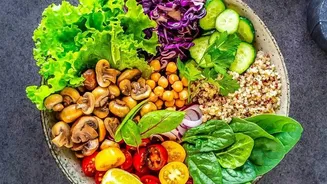
According to the study's supervisor, Dr. Devraj J. Parasannanavar, these findings emphasize the importance of looking at overall dietary quality rather than focusing on single foods or nutrients. The key takeaway is to build an anti-inflammatory, diverse, and nutrient-rich diet. This generally means prioritizing whole foods. An anti-inflammatory diet is rich in fruits, vegetables, whole grains like oats and brown rice, and legumes like lentils and chickpeas. Including sources of healthy fats, such as fatty fish, nuts, and seeds, can also help reduce inflammation. Indian spices like turmeric and ginger are also known for their potent anti-inflammatory properties. Conversely, it may be beneficial to limit foods known to be pro-inflammatory, including red and processed meats, sugary beverages, and highly processed snacks.