


The Foundation: A Guide to Candle Waxes
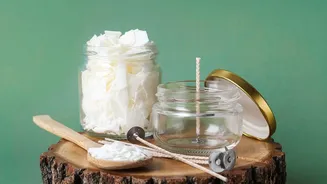
The wax is the heart of any candle, determining its burn time, scent performance, and environmental footprint. The most common is paraffin wax, a byproduct of petroleum refining. It's affordable and known for its powerful scent throw, making it a staple
for many mass-market brands. However, it is derived from a non-renewable resource and can produce more soot. As an alternative, plant-based waxes have become incredibly popular. Soy wax, made from hydrogenated soybean oil, is a renewable resource that offers a cleaner, slower burn, which can make your candle last longer. Other natural options include beeswax, a long-burning wax produced by honeybees with its own subtle, sweet aroma, and coconut wax, praised for its clean burn and excellent scent throw. Many brands also use blends, combining different waxes to achieve the perfect balance of scent performance and burn quality.
Wicks, Scents, and Ambiance
The wick acts like a straw, drawing melted wax up to the flame to be burned. Most candles use braided cotton wicks, which are reliable and easy to light. However, they can sometimes 'mushroom' with carbon buildup, requiring regular trimming to prevent a large flame and excess soot. A popular alternative is the wooden wick, a thin slab of wood that provides a cleaner, slower burn. Many users love wooden wicks for the gentle crackling sound they produce, which adds a cozy, fireplace-like ambiance to a room. They also tend to create a wider melt pool, which can lead to a more even and consistent release of fragrance. As for the scent itself, it comes from fragrance oils. These can be synthetic, natural, or a blend of both, and are carefully formulated for safety and performance in a candle.
The First Burn Is the Most Important
To get the most out of your candle and prevent a frustrating issue called 'tunnelling', the first burn is critical. Candles have what is called a 'wax memory'. The first time you light a candle, you must let it burn long enough for the entire surface to become liquid wax, creating a melt pool that reaches the edges of the container. This typically takes two to four hours, depending on the candle's size. If you extinguish it too soon, the candle will 'remember' that smaller pool and will only burn down the center in the future. This wastes all the wax stuck to the sides of the jar and significantly reduces the life of your candle and its ability to fill the room with scent.
An Essential Candle Safety Checklist
Enjoying scented candles safely comes down to a few simple but non-negotiable rules. First, always trim your wick to about a quarter of an inch before every single burn. A long wick creates a larger, more unstable flame that can produce soot. Place your candle on a stable, heat-resistant surface away from drafts, curtains, children, and pets. An open window, fan, or vent can cause the flame to flicker and burn unevenly. As a general rule, never burn a candle for more than four hours at a time, as this can cause the container to overheat. Allow the candle to cool for at least two hours before relighting. Finally, and most importantly, never leave a burning candle unattended. Always extinguish it before you leave a room or go to sleep.