





Meet the PRIMA Mission
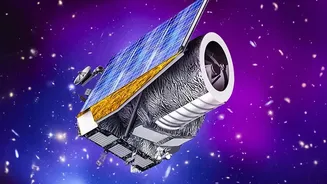
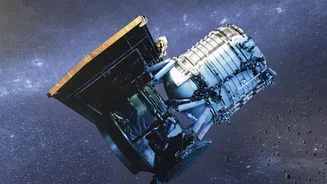
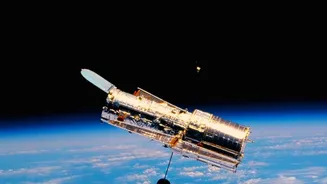
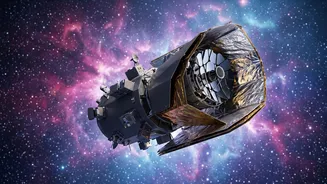
NASA has officially moved forward with the Probe far-Infrared Mission for Astrophysics, or PRIMA. This new space telescope is the first of a new class of missions called Probe Explorers, designed to be more targeted and cost-effective than flagship observatories
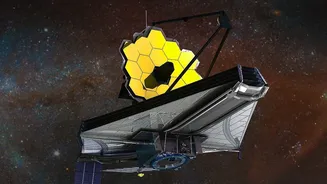
like the James Webb Space Telescope (JWST). With a project cost capped at around $1.2 billion, PRIMA represents a strategic middle ground, enabling high-priority science without the decade-spanning, multi-billion-dollar budgets of its larger siblings. Recommended by the National Academies' 2020 Decadal Survey, the Probe Explorer program aims to consistently launch powerful new observatories. PRIMA was selected to advance to its preliminary design phase and, if all goes to plan, is targeted for launch no earlier than 2033 for a five-year mission. It will feature a 1.8-meter (5.9-foot) telescope and will be positioned at the L2 Lagrange point, a gravitationally stable spot about 1.5 million kilometers from Earth, where JWST also resides.
The Far-Infrared Gap Explained
To understand PRIMA's importance, you have to think about the electromagnetic spectrum. Visible light is just a tiny fraction of the light that travels through the universe. Telescopes are designed to see specific wavelengths, from high-energy X-rays to long-wavelength radio waves. JWST is a champion of the near- and mid-infrared, while ground-based arrays like the Atacama Large Millimeter/submillimeter Array (ALMA) excel at radio wavelengths. Between them lies the "far-infrared gap." This is a crucial portion of the spectrum that has been historically difficult to observe. Earth's atmosphere blocks this light almost completely, meaning we must go to space. Furthermore, detecting far-infrared requires incredibly cold instruments to avoid being blinded by their own heat. Previous missions like the Spitzer and Herschel space telescopes made initial forays into this realm, but PRIMA promises a giant leap in sensitivity and resolution, finally giving astronomers the powerful tool they need to properly explore this unseen part of the cosmos.
What We Can See in Far-Infrared
So what cosmic secrets are hiding in this gap? The far-infrared is the domain of the cold universe. While hotter objects glow in visible or near-infrared light, cooler objects with temperatures around 140 Kelvin (-133°C) or less radiate most strongly in these longer wavelengths. This makes PRIMA a perfect tool for studying the cradles of creation. Its primary science goals include exploring how galaxies and their central supermassive black holes grow, tracing the formation of stars, and understanding how planets get their start. Critically, certain molecules, including water, have unique spectral signatures that only appear in the far-infrared. This means PRIMA will be able to map the distribution of water vapor in the dusty disks where planets are born, a task that is impossible for JWST. By tracing these ingredients, scientists can investigate the origins of planetary atmospheres and even get clues about how water arrived on Earth.
A Collaborative Cosmic View
PRIMA isn't a replacement for JWST but a vital collaborator. Astronomy is a multi-wavelength endeavor; a single mission can't reveal all of the universe's mysteries. By providing a comprehensive view in the far-infrared, PRIMA will fill in a huge piece of the puzzle. For example, when studying a protoplanetary disk, JWST can see the hot inner regions where water exists as vapor. ALMA can see the frigid outer zones where molecules like carbon monoxide freeze into ice. PRIMA is designed to see the crucial middle region, where much of the action in planet formation occurs. This synergy allows scientists to build a complete picture of how a solar system evolves. PRIMA will also investigate the buildup of cosmic dust and heavy elements over time and examine distant, icy objects in our own Kuiper Belt. Its wide field of view will enable it to conduct large-scale surveys, complementing the deep, narrow focus of telescopes like Webb.