







Meet NASA's New Planet Specialist
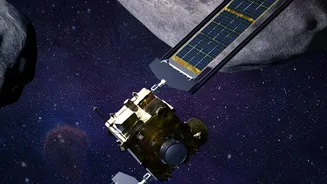
Pandora is a small satellite, or SmallSat, with a very big job. Launched in early 2026, its mission is to spend a year studying the atmospheres of at least 20 known exoplanets—planets orbiting stars other than our Sun. It is the first mission to launch
as part of NASA's Astrophysics Pioneers program, which focuses on conducting high-impact science with smaller, cost-effective spacecraft. Unlike giant observatories that do many jobs, Pandora is a specialist. Its entire purpose is to solve one of the most frustrating problems in exoplanet science: how to get a clear reading of a planet's atmosphere without its own star getting in the way.
The Challenge of Starlight
To understand what an exoplanet's atmosphere is made of, scientists use a technique called transit spectroscopy. When a planet passes in front of its star from our perspective (an event called a 'transit'), a tiny fraction of the starlight filters through the planet's atmosphere. Different gases and clouds in that atmosphere absorb specific colours of light, leaving a chemical fingerprint that telescopes can read. This is how we can look for water, methane, and other signs of a potentially habitable world. The problem is that stars aren't perfect, steady light bulbs. They have dark 'starspots' (like sunspots) and bright patches that rotate and change. This stellar activity creates 'noise' in the data that can mimic or completely hide the faint signal from the planet's atmosphere, making it incredibly difficult to know what you're really seeing.
Pandora's Clever Solution
This is where Pandora's genius comes in. The satellite is designed to untangle the light from the star and the planet. It does this by observing the planetary system with two detectors at the same time. A visible light camera watches the star itself, tracking the changes caused by starspots and other activity. Simultaneously, a near-infrared spectrometer measures the light coming through the planet's atmosphere during a transit. By collecting long, uninterrupted observations—staring at each target for 24 hours at a time—Pandora builds a precise model of the star's 'noise'. This model can then be used to statistically remove the stellar contamination from the atmospheric data, leaving behind a much cleaner and more reliable signal from the planet itself. It's like having a noise-cancelling headset for a telescope.
A Partner to Webb
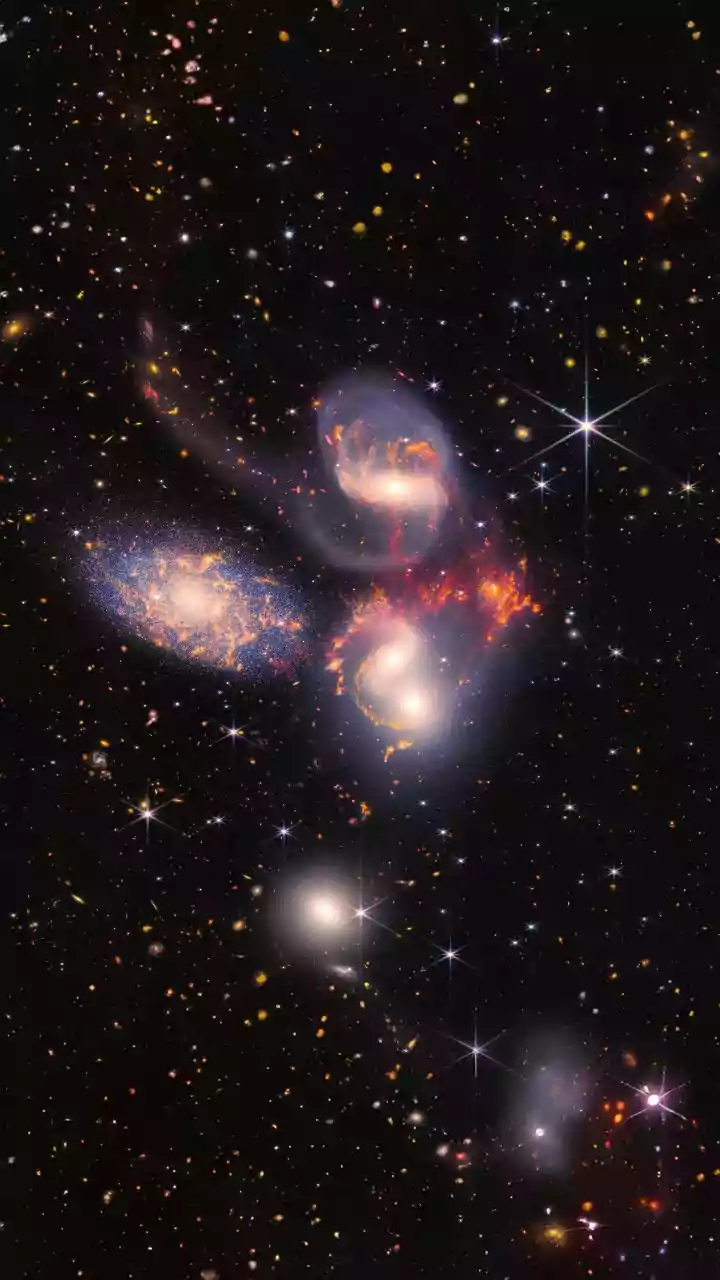
Pandora isn't designed to compete with massive observatories like the James Webb Space Telescope (JWST); it's designed to help them. In fact, Pandora's near-infrared detector is a spare part originally built for JWST. The JWST is incredibly powerful, but its time is extremely valuable and in high demand. It can't afford to spend hours staring at a target only to find the data is too contaminated by stellar activity. Pandora acts as a scout. By dedicating its time to long observations, it can identify which exoplanets are the most promising targets with the 'cleanest' signals. This allows JWST to focus its powerful instruments on the worlds most likely to yield groundbreaking discoveries, making the entire process of atmospheric science more efficient and effective.