
It’s the scent of bakeries and the heart of countless desserts. But the familiar flavour of vanilla has a surprisingly exotic and laborious origin story, beginning not with a bean, but with the flower of a tropical orchid.
The Orchid and its Origins
The flavour we call vanilla comes
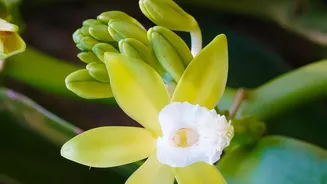
from Vanilla planifolia, a species of orchid native to the hot, humid climates of Mexico and Central America. This vining plant climbs up trees in tropical forests, producing beautiful, pale greenish-yellow flowers. For centuries, its cultivation was a secret held by the Totonac people of Mexico, who used the prized pods as currency and flavouring. When the Aztecs conquered the Totonacs, they adopted vanilla, famously mixing it with cacao to create a drink called 'xocolatl'. It wasn't until Spanish explorers brought the pods to Europe in the 16th century that the rest of the world got its first taste of this enchanting spice.
A Pollination Puzzle
For over 300 years after its arrival in Europe, attempts to cultivate the vanilla orchid outside of Mexico failed. The vines would grow and flower, but they would not produce the coveted pods. The mystery was a tiny, specific insect native to Mexico: the Melipona bee, the plant's only natural pollinator. The flower's anatomy includes a small flap of tissue, the rostellum, that separates its male and female parts, preventing self-pollination. The Melipona bee was the only creature that had co-evolved to bypass this barrier. This botanical puzzle meant Mexico held a global monopoly on vanilla production for centuries.
The Breakthrough of Hand-Pollination
The game changed in 1841 on the island of Réunion, then called Île Bourbon. A 12-year-old enslaved boy named Edmond Albius developed a simple yet revolutionary technique to pollinate the vanilla flower by hand. Using a thin stick or blade of grass, he discovered how to lift the rostellum and press the pollen-containing anther against the stigma. This manual method, still used today, is incredibly labour-intensive. Each flower opens for only one day, often just for a few hours in the morning, requiring workers to check the vines daily and pollinate each bloom one by one. Albius's discovery broke Mexico's monopoly and allowed vanilla cultivation to spread to other tropical regions like Madagascar, which now produces about 80% of the world's supply.
From Green Pod to Fragrant Bean
Even after successful pollination, the journey is far from over. The pods, which are botanically fruits, not beans, take up to nine months to mature on the vine. When harvested, these green pods are surprisingly odourless. Their iconic flavour and aroma are developed through a lengthy and meticulous curing process that can last several months. The process typically involves four stages: dipping the green pods in hot water to stop them from growing further, 'sweating' them in wool blankets to kickstart enzymatic reactions, a long period of sun-drying during the day and wrapping at night, and finally, conditioning for weeks or months to fully develop their complex flavour.
Real Vanilla vs. The Imitator
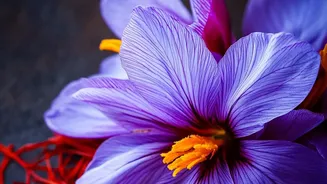
The complex, labour-intensive process makes vanilla the second-most expensive spice in the world after saffron. This cost led to the creation of synthetic vanillin. While vanillin is the primary flavour compound in vanilla, a real vanilla bean contains over 200 other compounds that contribute to a rich, deep, and nuanced profile with floral, woody, or smoky notes. Imitation vanilla, made from synthetic vanillin derived from sources like wood pulp or petrochemicals, provides only the single, dominant vanilla note and can taste flat by comparison. So when you see those tiny black specks in your ice cream, they're a good sign you're enjoying the complex flavour born from a tropical orchid.