





An Ambitious New Timeline
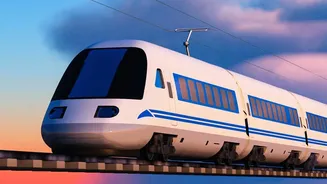
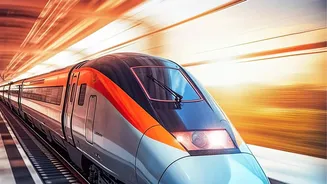
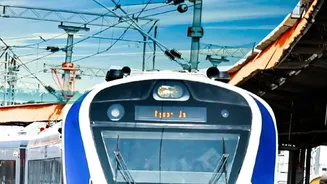
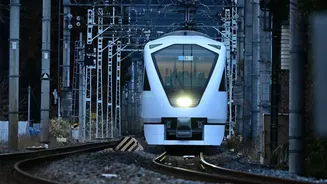
The country's first high-speed rail corridor is now aiming for its first major test in 2027. According to Union Railway Minister Ashwini Vaishnaw, trials for India's indigenous bullet train are expected to commence between May and June of 2027 on a section
of the Mumbai-Ahmedabad corridor. This significant step follows the completion of the train's first body frame, which has been sent for crucial structural testing. While the entire 508-kilometre line is projected for completion by 2029, the initial service is slated to launch on a priority section in Gujarat. Specifically, the first operational run is planned for August 2027 on the stretch between Surat and Bilimora, marking a major milestone in a project that has navigated numerous delays.
State of the Project
Construction on the high-speed corridor is advancing at a rapid pace, especially across Gujarat. The National High Speed Rail Corporation Limited (NHSRCL), the agency executing the project, has made substantial headway. As of late 2025, physical progress on the project had crossed the 55% mark. Work is proceeding simultaneously on civil structures, track laying, and electrification. In Gujarat, work on several stations is complete, and track installation has begun in key locations like Surat and Bharuch. The project, however, has faced significant hurdles, most notably land acquisition delays in Maharashtra, which, combined with pandemic-related disruptions, pushed back the original 2023 deadline. With these issues now largely resolved, construction in Maharashtra is also gaining momentum.
A Feat of Engineering and Collaboration
The Mumbai-Ahmedabad corridor is being built with Japanese Shinkansen technology, renowned for its exceptional safety and reliability record. The collaboration involves not just technology but also significant financial assistance from the Japan International Cooperation Agency (JICA), which is funding a major portion of the project through a concessional loan. The project is a massive undertaking, involving the construction of viaducts, bridges over rivers, and even an undersea tunnel to enter Mumbai. It is designed for trains to operate at a speed of 320 km/h, which will drastically cut the travel time between the two financial hubs from over seven hours to approximately two hours for the fastest service.
More Than Just Speed
The bullet train's impact is expected to extend far beyond faster travel. Economists and urban planners predict it will act as a major catalyst for regional development. By linking key economic centres like Mumbai, Surat, Vadodara, and Ahmedabad, the corridor is expected to boost business, tourism, and real estate development along its route. The improved connectivity will make it easier for people to commute for work and business, effectively creating a more integrated economic zone. The project is also a significant generator of employment, creating thousands of direct and indirect jobs in construction, manufacturing, and operations. Furthermore, it serves as a blueprint for future high-speed rail projects, with the government having already announced plans for several other corridors.
What to Expect from the Trial Run
The 2027 trial run is a critical phase but does not signify the immediate launch of full commercial services across the entire route. This testing phase will be conducted on a completed section in Gujarat to validate the performance and safety of the trains and infrastructure at high speeds. These trials are expected to last for a few months, after which a gradual, phased rollout of passenger services will begin. The first commercial service is expected to be on the Surat-Bilimora section, with other parts of the corridor in Gujarat opening progressively before the full line to Mumbai becomes operational by the 2029 target. This phased approach allows the operator to refine systems and scale up operations efficiently.