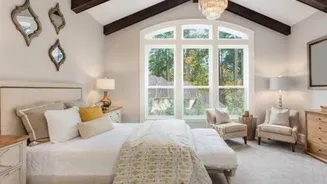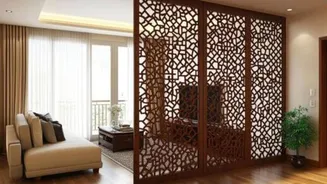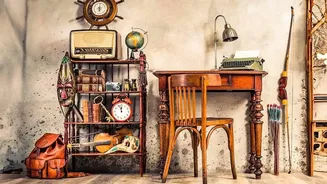




The Purity of Paint-Only Design
Choosing to leave a colour-blocked shape unadorned makes a strong, architectural statement. This approach treats the painted form itself as the art. The focus is entirely on the boldness of the shape and the richness of the hue, creating a look that is minimalist,
graphic, and confident. It’s a technique that works exceptionally well in modern homes where you want to highlight architectural features or create a focal point without adding clutter. Think of a deep blue circle behind a simple console table or a warm terracotta arch to frame a headboard. The effect is dramatic and intentional, turning a plain wall into a piece of abstract art. For this to succeed, precision is key. Crisp, clean lines achieved with high-quality painter's tape are non-negotiable, and a matte paint finish is often preferable to reduce glare and let the pure colour saturate the space.
The Layered Story of Framed Art
On the other side of the debate is the choice to hang framed art over your colour block. This method adds a layer of personality and depth, transforming the painted shape into a backdrop or a grand frame for another piece of art. It’s a way to create a 'gallery-within-a-gallery' effect. This approach can soften the boldness of a strong colour block, introduce texture, and provide a specific focal point for the eye. A single, large piece of art can anchor the coloured shape, while a collection of smaller frames can create a dynamic, curated feel. This is perfect for those who want their walls to tell a more personal story. The key is to create a harmonious relationship between the paint colour, the artwork, and the frame. Choosing a piece of art that either complements or intentionally contrasts with the background colour is crucial for a cohesive look.
Making the Right Choice for Your Space
The decision between a pure paint finish and adding art depends on the room's function and the mood you want to create. For a serene, minimalist bedroom, a simple colour-blocked headboard in a calming tone might be all you need. In a bustling living room or entryway, adding framed art can create a vibrant, welcoming focal point that sparks conversation. Consider the scale of the room and the wall. A large, empty wall in a spacious room can handle a bold, unadorned geometric shape. In a smaller space, a colour block with a carefully chosen piece of art can create an illusion of depth and prevent the wall from feeling flat or overwhelming. Also, think about your existing furniture. If your furniture is minimalist, a bold, paint-only block can shine. If your furniture is more traditional or eclectic, art can help bridge the stylistic gap.
Tips for Flawless Execution
Whichever path you choose, a professional finish is essential. For the paint-only approach, use a level and painter's tape to sketch your design, pressing the tape down firmly to prevent bleeding. Choose your colour palette thoughtfully; you can use complementary colours for high drama or different tones of the same colour for a subtler, monochromatic look. If you're adding art, consider the 'rules' of hanging pictures. The artwork should feel connected to the colour block, not just stuck on it. A common strategy is to hang the art so its centre is at eye level, approximately 150cm from the floor. The frame is also a critical decision. A simple black, white, or natural wood frame often works best, as it can provide a clean border that separates the art from the bold colour behind it without introducing yet another competing element.