






Eyes in the Sky on the Deep Earth
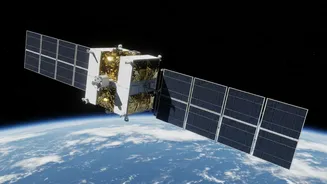
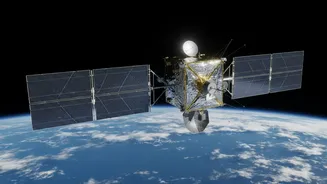
Studying Earth's core, a region some 2,900 kilometres down, is an immense challenge. We can't drill into it or see it directly. Instead, scientists rely on indirect clues, and our most powerful tools for this are surprisingly far away: in space. A constellation
of satellites, including the European Space Agency’s Swarm mission, orbits our planet with a singular purpose: to measure its magnetic field with incredible precision. This field is generated by the movement of liquid iron in the outer core. By tracking subtle changes and fluctuations in the magnetic field over time, researchers can create models of how that deep, hidden ocean of metal is flowing. It’s like trying to understand ocean currents by only observing their effect on the climate above.
The Unexpected U-Turn
For decades, these satellite observations suggested a relatively stable pattern. The flow of the molten outer core was predominantly moving westward. But in 2010, something dramatic and unexpected happened deep beneath the Pacific Ocean. A huge section of this flow, which had been moving weakly to the west, slammed on the brakes and began moving rapidly eastward. This reversal was a shock, as it happened over a geological blink of an eye—just a few years. It defied the long-held belief that the core's dynamics were slow and steady processes that played out over millennia. This sudden shift suggests the engine at the center of our world is far more turbulent and complex than previously imagined.
Our Planet's Magnetic Engine
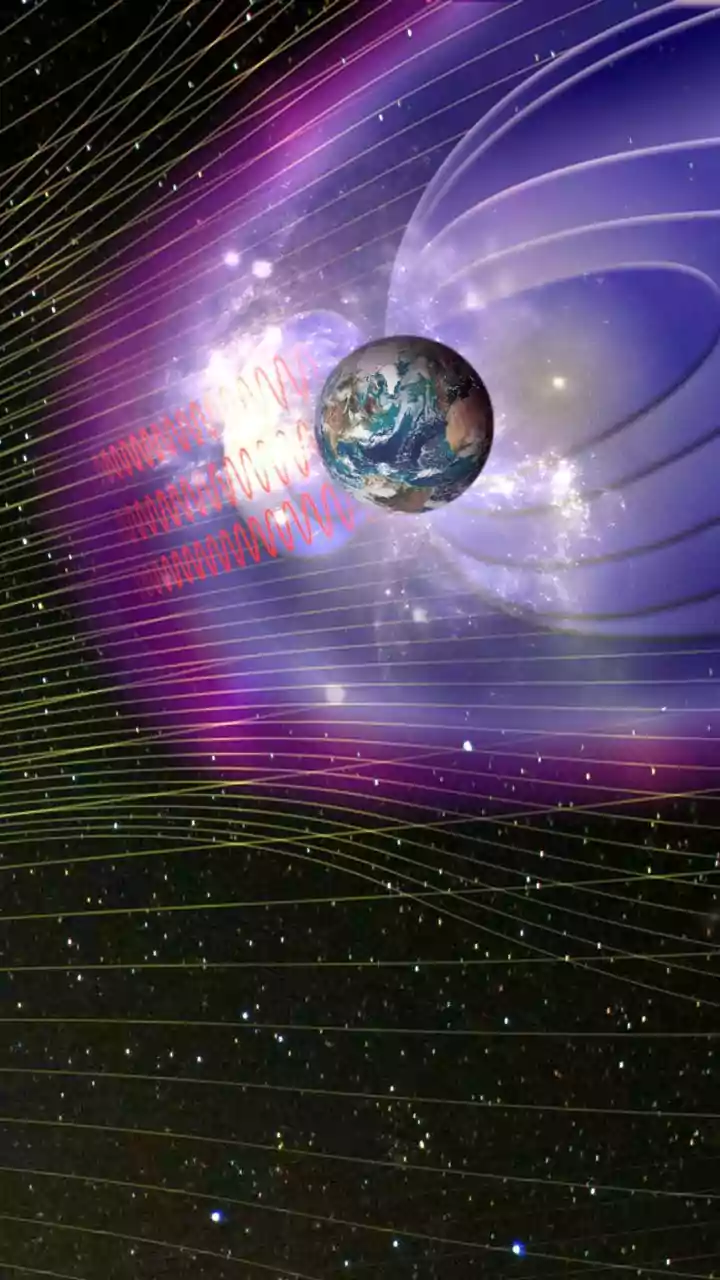
To grasp the significance of this reversal, it helps to understand the core's role. Earth has a solid inner core surrounded by a liquid outer core composed mostly of molten iron and nickel. The planet's rotation and heat escaping from the inner core cause this liquid metal to churn in massive, turbulent currents. Because the metal is electrically conductive, its movement generates powerful electric currents, which in turn create Earth's magnetic field. This process is known as the geodynamo. The magnetic field isn't just a curiosity for compasses; it acts as a vital shield, protecting Earth from harmful solar radiation and charged particles from the sun that would otherwise strip away our atmosphere.
Why Does This Reversal Matter?
A sudden change in the geodynamo's engine room is a major event. Scientists are now racing to understand its cause and implications. The reversal doesn't pose any immediate danger to us on the surface. However, it provides a crucial new piece of the puzzle for understanding how our planet works. Researchers are investigating whether this was a one-off fluctuation, a part of a repeating cycle, or the beginning of a new, stable pattern of flow. Some evidence suggests the eastward flow has already started to weaken since 2020, pointing towards a temporary oscillation. What's more, scientists have noted that this core flow reversal happened around the same time as other observed changes in the solid inner core’s behaviour, hinting at a deep connection between Earth’s different layers.