





What Exactly Is a Beam Balance Board?
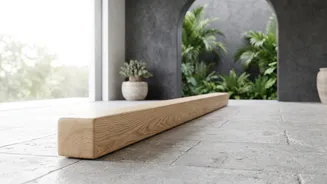
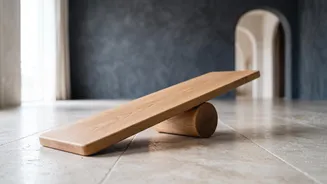
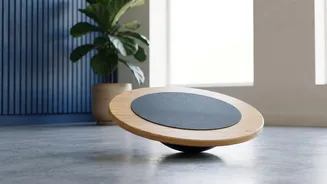
Unlike round wobble boards that tilt in every direction, a beam balance board is a long, narrow plank, often made of wood, raised slightly off the ground. This design creates a unique challenge: it primarily tests your ability to maintain balance along
a single, linear path. The goal is to walk or stand on it without your feet or the edges of the board touching the floor. This focused instability is fantastic for developing controlled movement, precise foot placement, and, most importantly, deep core strength.
Why It Supercharges Your Core
Every moment you spend on a balance board, your body is making countless tiny, unconscious adjustments to keep you upright. This constant state of micro-correction forces your core muscles—including your deep abdominals, obliques, and lower back—to remain continuously engaged. This process, known as improving proprioception, is essentially training your body's awareness of its position in space. By constantly activating these stabilizing muscles, you're not just building a 'six-pack'; you're developing functional strength that supports better posture, reduces the risk of back pain, and enhances performance in nearly every other physical activity.
Getting Started: Your First Moves
Safety is paramount when you're starting out. Place your beam on a flat, non-slip surface like a thin rug or mat, away from furniture or sharp corners. For your first few attempts, position the board near a wall or a sturdy chair you can hold onto for support. Start by placing one foot at one end of the board. Slowly, place your other foot on the opposite end, aiming for a shoulder-width stance. Keep your knees slightly bent, extend your arms to the sides for balance, and fix your gaze on a point in front of you, not down at your feet. Your initial goal is simply to find your center and hold the position without wobbling off.
Beginner Core Exercises
Once you can stand comfortably for 30 seconds, you can introduce some simple movements. Start with gentle weight shifts, slowly tilting the board from side to side in a controlled manner. Next, try a basic squat. While balancing, slowly lower your hips as if sitting in a chair, go as low as you feel stable, hold for a moment, and then rise back up. Another great beginner exercise is the single-leg balance. From your stable two-foot stance, slowly shift your weight to one foot and carefully lift the other just an inch or two off the board. Hold for as long as you can before switching sides. Each of these movements will force your core to work overtime to keep you stable.
Intermediate Core Challenges
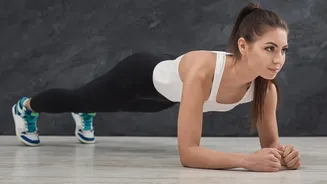
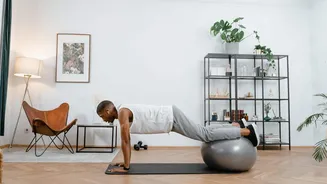
When you're ready to progress, you can make the exercises more dynamic. Try performing lunges by stepping one foot onto the center of the board, lowering your body until your front thigh is parallel to the floor, and then pushing back to the start. You can also attempt a plank with your hands or forearms on the board. The unstable surface will add a significant core challenge compared to a standard plank on the floor. For an advanced variation, try 'sit-throughs' by starting in a plank position and sweeping one leg under your body to the opposite side, rotating your torso as you go.
Safety First: What to Avoid
Always listen to your body and progress at your own pace. Avoid using the board on slippery surfaces like tile or hardwood without a mat underneath. It's best to use athletic shoes with good grip or go barefoot for better traction. Do not multitask while on the board; put your phone away and focus on your balance. Finally, learn to step off safely—step forward or to the side rather than jumping off, especially if you lose your balance. And if you feel overly fatigued, take a break. Overuse can lead to strains.