
A Mysterious Red Dot in Deep Space
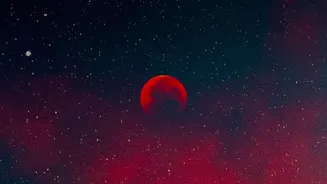
Astronomers using NASA's James Webb Space Telescope (JWST) have identified a peculiar object that defies easy categorisation. Located billions of light-years away, in a period just 660 million years after the Big Bang, this object appears as an extremely
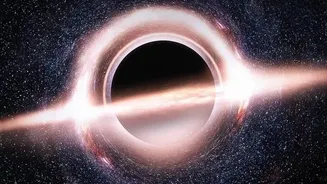
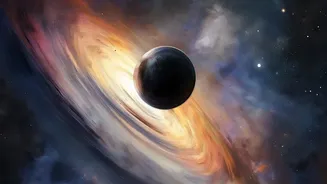
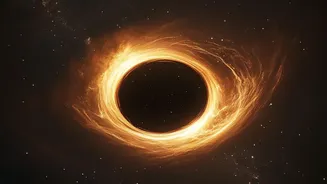
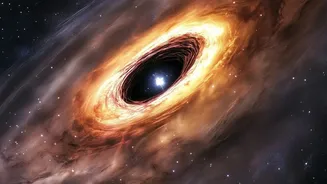
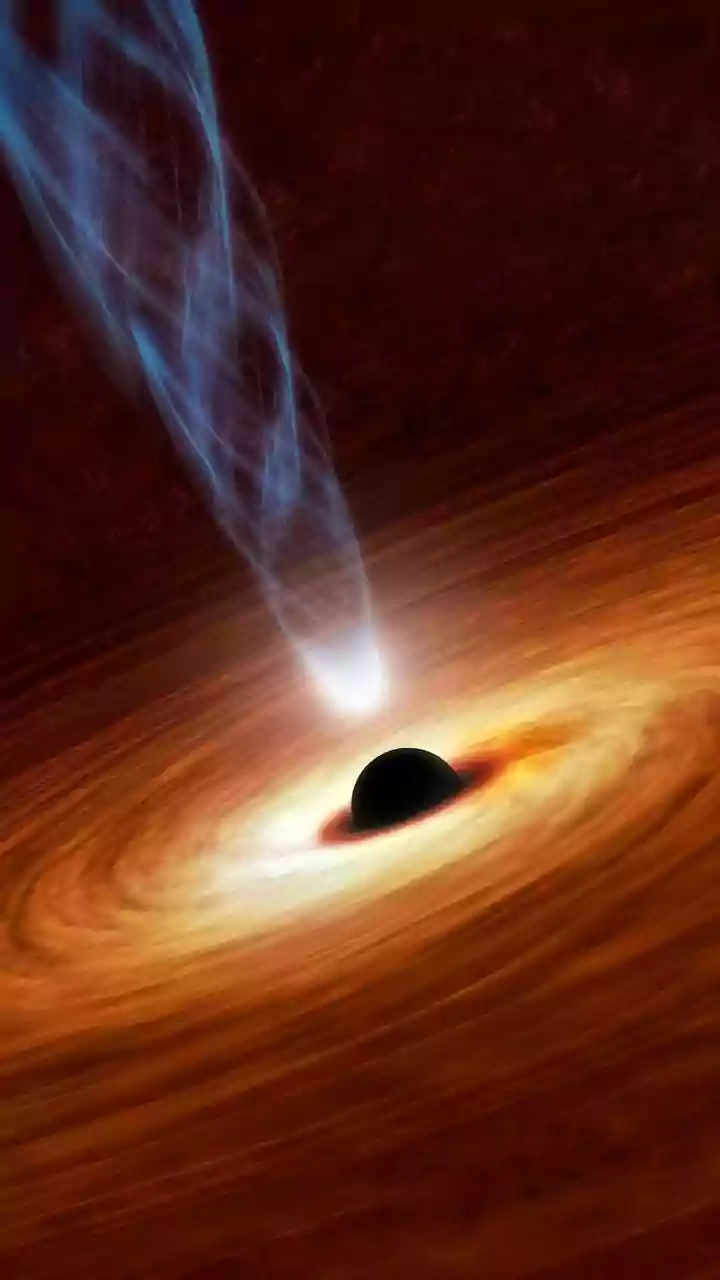
bright, red spot. Named MoM-BH*-1, it has the size of our solar system but shines with the energy of 100 billion suns — far more than any normal star could produce. This immense energy output is more typical of a black hole. This strange combination led scientists to propose they have found an entirely new type of celestial body: a 'black hole star'.
What Exactly Is a 'Black Hole Star'?
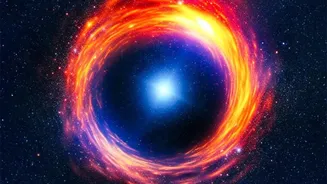
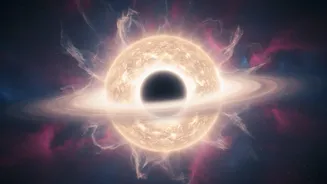
The term 'black hole star' is a nickname for a theoretical object known as a quasi-star. Unlike a normal star, which is powered by the nuclear fusion of elements in its core, a quasi-star gets its energy from a black hole at its centre. The theory suggests that in the early universe, enormous clouds of primordial gas could collapse to form a protostar thousands of times more massive than our sun. The core of such a massive object would collapse into a black hole, but the star's outer layers would be so immense that they wouldn't be blown away. Instead, they would form a massive, glowing envelope of gas, powered by the intense radiation from the black hole feeding on the star from the inside out. To an observer, this would look like a colossal, bright red star.
Solving a Supermassive Problem
One of the most persistent mysteries of the early cosmos is the existence of supermassive black holes. These behemoths, millions or billions of times the mass of our sun, were already present when the universe was less than a billion years old. According to standard models of black hole growth, there simply wasn't enough time for smaller, stellar-mass black holes to grow that large so quickly. It's like finding a skyscraper that was supposedly built in a single day. Scientists have long debated how these cosmic giants formed so rapidly, and quasi-stars offer a compelling solution.
The Ultimate 'Seed' for Giant Black Holes
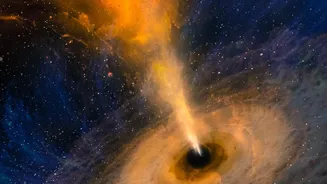
Quasi-stars act as a crucial stepping stone. They provide a mechanism for creating an 'intermediate-mass' black hole very quickly. The black hole at the heart of a quasi-star could have a starting mass of around 100,000 times that of the sun. By rapidly consuming the vast envelope of gas surrounding it, the black hole can grow at an accelerated rate, far faster than a black hole in open space. Once the quasi-star's gaseous envelope is consumed or dissipates, it leaves behind a massive black hole 'seed'. This seed is already substantial enough to grow into the supermassive black holes we see in the dawn of the universe, neatly solving the timeline problem.
More Than Just One Red Dot?
The discovery of MoM-BH-1 is exciting because it might not be a one-off. The JWST has spotted many other 'little red dots' scattered across its images of the early universe. For years, astronomers have debated what these objects could be. The team behind the new discovery suggests that many of these dots could also be black hole stars, but MoM-BH-1 is special because it's so bright that its light completely outshines its host galaxy, giving us a pure, unobstructed view. If confirmed, this finding not only reveals a new class of object but also provides a new framework for understanding the first chapters of our universe's history.